Overview
Solar water heating systems (or solar thermal systems) convert infra-red light into heat and circulate this heat through your hot water cylinder. This renewable energy system could be right for you if you have good space for the panels to be in direct sunlight and have space for a large water cylinder. Conventional boiler systems are often compatible with solar heating systems so are unobtrusive to install and avoid additional renovation costs.
How Does Solar Water Heating Work?
Solar water heating panels are installed on your roof and absorb heat from the sun’s infrared radiation, not just direct sunlight, which means they generate heat on cloudy days too, though output is lower.
Inside the panels, a fluid mixture of water and glycol is heated and pumped through a circuit into a heat exchanger inside your hot water cylinder. The heat is transferred to the water in the cylinder, which is then available for use in the home. When the panels cannot provide enough heat, on cold or overcast days or for high-demand periods, your boiler or immersion heater tops the cylinder up to the required temperature.
Types of Solar Water Heating Panels
There are two main panel types, and the right choice depends on your roof, your budget, and how much heat output you need.
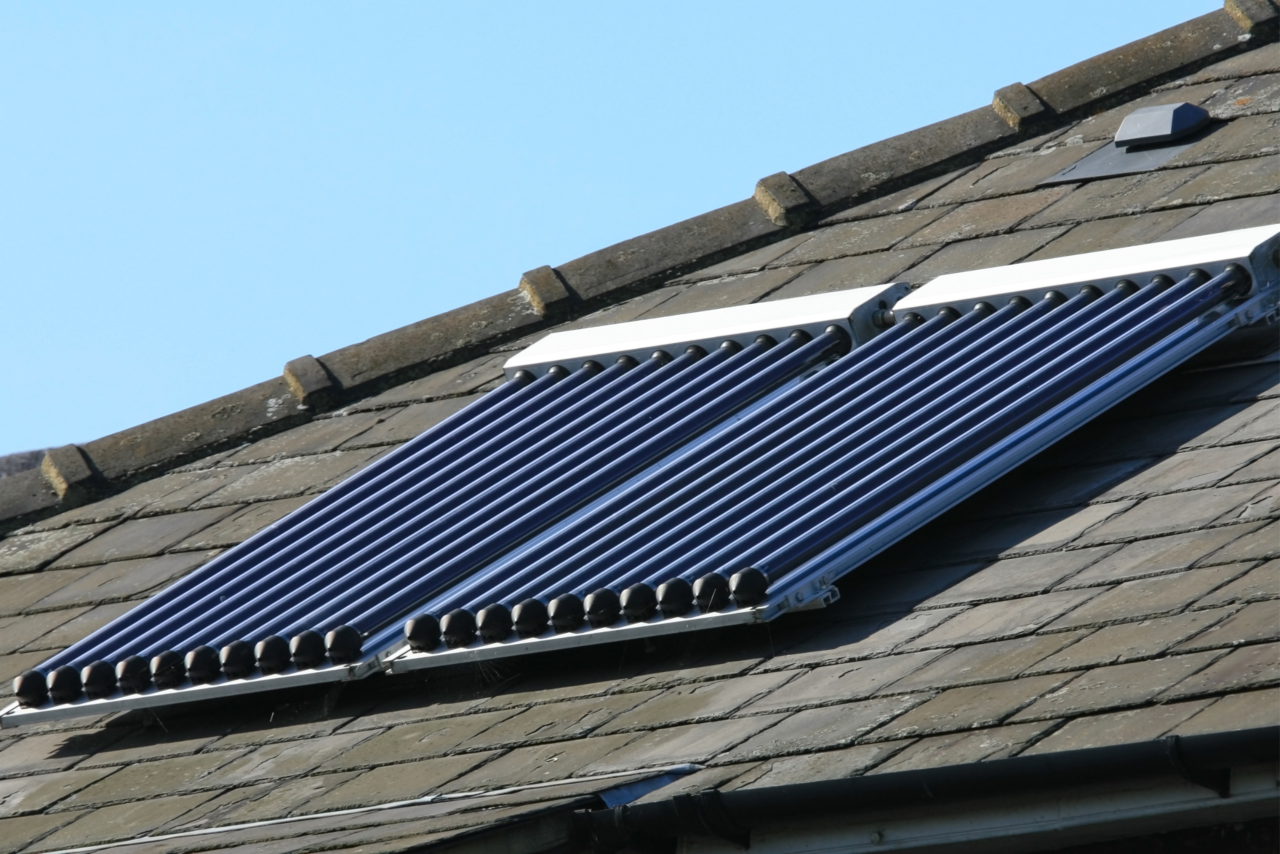
- Evacuated tubes (pictured in left photo below) consist of a bank of glass tubes mounted on the roof. Each tube contains a smaller inner tube coated with a heat-absorbing material, with a vacuum between the two layers that acts as insulation. Evacuated tubes perform better in cold or low-light conditions and are generally more efficient, but they are more expensive and slightly more complex to install.
- Flat plate collectors (pictured in right photo below) are a panel fixed to or integrated into the roof tiles. They are simpler in construction, lower in cost, and slightly less efficient than evacuated tubes, but they are durable and well-proven, and perform well in the UK climate. Integrated flat plate systems sit flush with the roof and have a neater appearance than tile-mounted options.
For most UK homes, either system will perform adequately. An MCS-certified installer can advise which is better suited to your roof orientation, pitch, and available space.

Benefits of Solar Water Heating

Reduces the Cost of Hot Water Bills

Lowers your Carbon Footprint

Provides Hot Water Throughout the Year
Is Solar Water Heating Right for My Home?
Solar water heating works best when you have a south-facing roof with minimal shading, space for a hot water cylinder if you do not already have one, and reasonable hot water demand. East or west-facing roofs can still work but with reduced output.
It is less well suited to homes that already have a combi boiler with no hot water cylinder, as a cylinder would need to be added, which increases cost and requires space. If you are considering a heat pump, it is worth knowing that many heat pump systems also provide hot water, which may make a separate solar thermal system unnecessary. Your installer can advise on the best combination for your home.
Solar Water Heating Costs & Funding
Funding through group-buying schemes, such as Solar Together, can give you a better market price for solar panels. Solar Together is the scheme for the Bristol local authority but similar schemes exist for other local authorities all over the UK.
Typically, a solar water heating system costs £6,000. Costs can vary depending on the type of system you choose and how many panels are required to get the desired heat generation.
Tips for Optimising your Solar Water Heating
- Set timers to ensure you’re using the hot water in times where you are generating the maximum amount of energy
- Insulate your pipes and water cylinder in order to minimise heat loss and improve efficiency
Solar Water Heating FAQs
How much of my hot water will solar water heating cover?
Solar water heating typically provides 40 to 60% of a household’s annual hot water needs. In summer, output can be high enough to cover almost all hot water demand.
In winter, the contribution is lower and your boiler or immersion heater will do more of the work. The exact figure depends on your system size, roof orientation, and how much hot water your household uses.
Does solar water heating work in winter or on cloudy days?
Solar water heating does work in winter and on cloudy days, though output is lower than in summer. Solar thermal panels generate heat from infrared radiation, which is present even on overcast days, so they do not require direct sunshine to operate. In winter you can still expect a useful contribution, but your backup heating system will cover a larger share of demand.
Do I need a certified installer for solar water heating?
Yes, it’s recommended to opt for MCS (Microgenerated Certified Scheme) certified installers. This ensures your panels are installed safely and correctly. You should also ask for a warranty and a maintenance contract, to protect your investment and prolong the lifespan of your panels.
What is the difference between solar water heating and solar PV?
Solar water heating and solar PV are two different technologies that serve different purposes. Solar water heating, also called solar thermal, converts sunlight directly into heat for your hot water cylinder. Solar PV converts sunlight into electricity, which can then power anything in your home including an immersion heater. Some homeowners choose solar PV over solar thermal because the electricity it generates is more versatile. An installer can help you work out which offers better value for your situation.
Do I need planning permission for solar water heating?
Solar water heating panels do not require planning permission in most cases, as they are considered permitted development. If you own a listed building or live in a conservation area, you should check with your local planning authority before installing, as restrictions may apply.
How much maintenance does a solar water heating system need?
Solar water heating systems need very little maintenance. You should check the pressure gauge periodically and contact your installer if the panels are not producing hot water in conditions where you would normally expect them to. MCS-certified installers provide at least a five-year warranty, and the system should be professionally checked, drained, and flushed every five years to maintain performance.
Do I need a specific type of hot water cylinder for solar water heating?
Solar water heating does require a specific type of hot water cylinder. You will need a twin-coil or solar-compatible cylinder, one that has a separate coil for the solar circuit as well as the connection for your boiler or immersion heater. If you already have a single-coil cylinder or a combi boiler with no cylinder, you will need a new cylinder installed as part of the system. This adds to the cost and requires space, typically in an airing cupboard or utility area.