Payback Periods for Energy-Saving Measures
The payback period for renewable energy technology, such as solar panels and heat pumps, is a key consideration for homeowners looking to invest in sustainable energy solutions. Explore the factors that influence the payback periods and see how long it’d take to break even.
What are payback periods?
Payback periods are defined as the length of time required for an investment to recover its initial outlay in terms of profits or savings. Essentially, how long it takes to get the money back that you initially spent, through saving money on bills. In the renewable energy sphere, this applies to how long it takes for you to break even if you’ve invested in solar panels or a heat pump for your property.
Are payback periods your only reason for investing in energy-savings measures?
Whilst financial factors drive the majority of our decisions, it’s not the only reason to want to switch to a greener lifestyle. Your comfort, health and carbon footprint all contribute to the decision-making process – and by investing in renewables, many people see clear improvements in their lifestyle, not just finances!
Can payback periods change?
Yes, they change based on the factors below. Always calculate your payback period based on your own energy consumption and using professional advice.
Do changes in electricity prices affect the payback periods?
Yes, higher electricity prices and market fluctuation generally means more savings on renewable energy generation. If you have increased energy independence from the national grid, you will experience more cost savings.
Do energy-efficiency measures increase the value of your home?
Solar Value – Solar Energy UK’s research has indicated that the value of properties is increased with the addition of solar technology, decreasing running costs and the environmental impact of the building. On average, houses with solar panels can sell for £1,891 more.
Furthermore, market trends indicate that the value of solar properties will only increase the price gap between buildings with and without renewable energy measures.
Heat Pump Value – Research carried out by the WWF has shown that a heat pump could add between 1.7% and 3.0% to the value of your home.
What are the different payback periods for energy-saving measures?
While the payback periods for renewable energy technologies, such as solar and heat pumps, can offer valuable insights, they may vary significantly based on factors such as location, energy consumption, and available incentives, and should be considered as general estimates rather than precise figures.
Solar Payback Periods
Upfront Cost Estimate: The price of a typical 3.5 kilowatt-peak PV solar panel system is about £7,000 (source: Money Saving Expert). Installations can range from £5,500 – £8,000, depending on desired savings.
Estimated Savings on Energy Bills: £300-700 per year
Estimated Payback Period in the UK: 9-12 years

Factors affecting the payback period:
- Sunlight exposure
- Location more north or south in the UK
- Electricity buying and selling rates
- Upfront cost of the panels and installation
- Government incentives:
- Household energy consumption
- Efficiency of the panels themselves
- Smart Export Guarantee rates (selling the electricity you generate back to the energy companies)
Have the payback periods undergone any changes over time?
Generally, the payback periods are shortening – due to the lowering costs of panel manufacturing, available government incentives, and increased technological advancement and efficiency of the panels.
How about if I add a battery system?
If you add a battery system to your panels, the payback period is affected. Batteries have a larger upfront cost but lower your payback period due to being able to use the energy you’ve generated in the evenings too. Read more about the benefits of battery storage here.
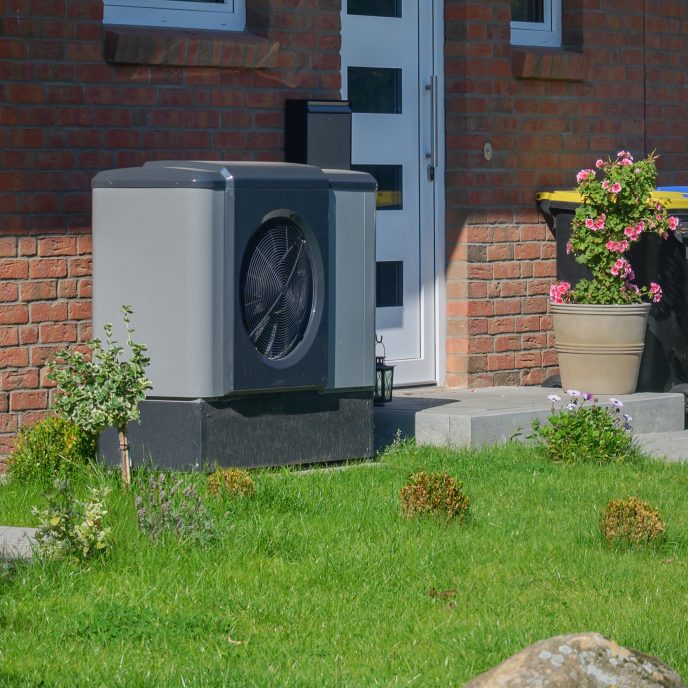
Air Source Heat Pump Payback Periods
Estimated Upfront Cost: £8,000 – £14,000 (Source: GreenMatch)
Estimated Savings on Energy Bills: up to £1,200
Estimated Payback Period in the UK: 7-12 yrs
Factors affecting the payback period:
- Sunlight exposure for solar gain
- Location more north or south in the UK
- electricity or gas buying rates
- Upfront cost of the machine and installation
- Government incentives, such as the Boiler Upgrade Scheme
- Household energy consumption
- Efficiency of the heat pump machinery
- Smart Export Guarantee rates (selling the electricity you generate back to the energy companies)
- Regular maintenance costs
Have the payback periods undergone any changes over time?
All research suggests heat pumps are a worthy investment in the long-run, despite the steep upfront costs. With the support from financial government schemes like the Boiler Upgrade Scheme, the costs can be drastically reduced to become close to any ordinary gas boiler. The payback periods can significantly reduce depending on the factors listed above. With ever-changing heating and building strategies, it is expected that payback periods can be reduced even further with more efficient machinery and installations.
Got a question?
Join the conversation on our forum and reach our database of trusted professionals!
Take Me to the ForumFAQs
How long do solar panels last?
According to the Renewable Energy Hub, solar panels are expected to last for 25-30 years. Energy production efficiency is expected to drop by about 10% after 20 years.
How long do heat pumps last?
Heat pumps are expected to last for 20-25 years. This is based on the average usage, correct installation and regular maintenance (every 3-5 years).
How can I estimate my payback period?
In practice, payback period calculations can be tricky due to the many different factors outlined above. In principle, divide the initial upfront cost spent on the project by the amount that the project saves each year on electricity or gas bills.
Do I need planning permission for solar panels?
Usually, no. However, if you own a listed building you should always follow guidelines set out by Historic England. Read their most recent updates here.
Do I need planning permission for a heat pump?
No, not in general. However, if you own a listed building you should always follow Historic England’s guidelines. Read their most recent updates here.
Are solar panels worth it in the UK?
Solar energy is clean, and renewable, and offers a promising way to reduce reliance on fossil fuels and combat climate change. However, the decision to invest in solar panels involves careful consideration of the initial costs and long-term benefits.
If you’re interested in learning more and how they can benefit your home, reach out to our Advice team at Retrofit West. We’re here to provide expert guidance and support to help you embark on your solar journey. Call us today at 0800 038 6733 or email advice@retrofitwest.co.uk.

Can improving your EPC rating add value to your home?
A recent report by Rightmove has highlighted the financial benefits of improving Energy Performance Certificate (EPC) ratings. Read more »
Read more