Overview
Heating controls range from basic programmable timers and thermostats to fully connected smart systems that learn your habits, respond to the weather, and can be adjusted from your phone anywhere in the world.
Heating controls are one of the most cost-effective upgrades you can make to your home. They do not change how your heating system generates heat. They change how intelligently it uses it. The right controls mean your home is warm when you need it, not when you don’t, which reduces wasted energy without compromising comfort. Even modest improvements to your heating controls can cut your energy bills noticeably.
Types of heating controls
Programmable Timers
A basic timer lets you set when your heating and hot water come on and go off. Most modern boilers come with a programmer as standard, but many homeowners never get beyond the factory settings. Simply programming your heating to match your actual routine, rather than running all day, can make a meaningful difference to your bills.
Room Thermostats
A room thermostat senses the air temperature in your home and tells the boiler to stop heating once the target temperature is reached. This prevents your boiler from running unnecessarily and keeps your home at a consistent temperature. Most homes already have one, but if yours is old, poorly positioned, or not connected to your boiler correctly, replacing or repositioning it can improve both comfort and efficiency.
The recommended thermostat setting for most homes is 18 to 21 degrees. Homes with young children, elderly residents, or people with health conditions can go up to around 23 degrees. There is no benefit to setting it higher than you need, as this simply uses more energy to reach a temperature that may not be comfortable.
Thermostatic Radiator Valves (TRVs)
TRVs are fitted to individual radiators and control the heat output in each room based on the room’s temperature. They allow you to set different temperatures in different rooms, warmer in living areas and cooler in bedrooms or rooms that are rarely used. They work alongside your main room thermostat rather than replacing it, and are a straightforward and inexpensive upgrade that can reduce energy waste significantly.
Smart Thermostats
Smart thermostats connect to your home Wi-Fi and can be controlled remotely via a smartphone, tablet, or computer. Most also learn your schedule over time and adjust heating automatically, and many integrate with weather forecasts to compensate for changes in outdoor temperature before you feel them inside.
Well-known systems include Nest, Hive, Drayton Wiser, and Honeywell Home. They vary in features and price, but all offer more precise control than a standard programmer and thermostat. Most cost between £100 and £250 including installation, and can typically be fitted in a few hours.
Weather Compensators
A weather compensator monitors outdoor temperature and adjusts the flow temperature of your boiler accordingly, turning it down on milder days and up on colder ones. This is particularly effective with condensing boilers and heat pumps, where running at lower flow temperatures improves efficiency. Many modern boilers support weather compensation but the sensor and setup are not always included as standard.
Load Compensators
A load compensator controls your boiler’s flow temperature based on how far the indoor temperature is from the target. Rather than running at full output until the target is reached and then switching off, it modulates output gradually, which is more efficient and results in more consistent comfort.
Zone Controls
Zone controls divide your home into separate areas that can be heated independently, for example upstairs and downstairs, or living areas and bedrooms. Each zone has its own thermostat and can be on a different schedule. Zoning is particularly useful in larger homes where different parts of the house have different heating needs throughout the day.
Benefits of Heating Controls

Save money on your energy bills

Keep your home cosy

Have control over your energy use
Smart heating controls – how do they work?
Smart heating can be controlled on your remote smart device (like smartphone, tablet or PC) via your home Wi-Fi. It can be controlled from wherever, as long as you have an internet connection!
Smart home systems have loads of clever features – too many to name, but we’ll have a go:
- Motion sensors and GPS tracking (to turn the heating on when you’re on your way home)
- Weather responsive settings
- Open window and draught detection
- Holiday modes (system hibernation when you’re out of town)
- Multi-room/zone settings (varying the temperatures between rooms)
- Safety modes (to prevent pipes freezing)
Smart Controls and Heat Pumps
If you have a heat pump or are planning to install one, getting the controls right is especially important. Heat pumps work most efficiently when they run at lower flow temperatures for longer periods rather than cycling on and off at high temperatures. A weather compensator is particularly valuable with a heat pump, as is avoiding the temptation to use TRVs to restrict flow through radiators, since heat pumps work best when water can circulate freely through the whole system.
Heating Control FAQs
Should I turn my thermostat up higher to heat my home faster?
No, turning your thermostat higher will not heat up your home fast.
Your boiler heats your home at the same rate regardless of what temperature the thermostat is set to. Setting it higher just means it runs for longer and overshoots the temperature you actually want, wasting energy in the process. If your home is not warming up quickly enough, the better solution is to set your heating to come on earlier rather than turning the temperature up.
What is the difference between a thermostat and a TRV?
A room thermostat controls the overall temperature of your home and tells the boiler when to switch on and off. A TRV controls the heat output of an individual radiator based on the temperature of that specific room. They work together rather than as alternatives. You should always have at least one radiator without a TRV in the room where your main thermostat is located, so the boiler has a reliable signal to respond to.
Is a smart thermostat worth it?
For most homes, yes a thermostat is worth it. Smart thermostats typically cost between £100 and £250 installed and offer more precise control, remote access, and in many cases learning features that optimise your heating schedule automatically. The energy savings they deliver mean they often pay back within one to two years. They are one of the lowest-cost, lowest-disruption upgrades available in retrofit.
Which smart thermostat should I choose?
The main options in the UK are Nest, Hive, Drayton Wiser, and Honeywell Home. All are reliable and well-supported. Nest and Hive are the most widely known and have the most polished apps. Drayton Wiser offers strong multi-zone control at a competitive price, making it a popular choice for homes that want room-by-room control without a large upfront cost. Your choice may also be influenced by whether your boiler installer has a preferred system they are familiar with fitting.
Can I install a smart thermostat myself?
Many smart thermostats are designed for DIY installation and come with straightforward instructions. However, if your current wiring is old or non-standard, or if you want the thermostat to communicate with your boiler using advanced protocols such as OpenTherm, professional installation is recommended. OpenTherm allows the thermostat to modulate your boiler’s output rather than simply switching it on and off, which can improve efficiency noticeably.
What is OpenTherm and does it matter?
OpenTherm is a communication protocol that allows a smart thermostat to talk to a compatible boiler and adjust its output continuously rather than just turning it on or off. A standard thermostat switches the boiler fully on when heating is needed and fully off when the target temperature is reached. OpenTherm-enabled systems can tell the boiler to run at a lower output for longer, which is more efficient and produces more consistent warmth. Not all boilers support OpenTherm, but many modern condensing boilers do. It is worth checking compatibility before buying a thermostat if efficiency is a priority.
Do heating controls work with heat pumps?
Yes heating controls are particularly important for using heat pumps. A heat pump works most efficiently when it runs continuously at low flow temperatures rather than switching on and off. Weather compensation is especially valuable, as it adjusts the flow temperature automatically based on outdoor conditions. If you are having a heat pump installed, ask your installer about the controls setup as part of the project rather than treating it as an afterthought.

Air and Ground Source Heat Pumps
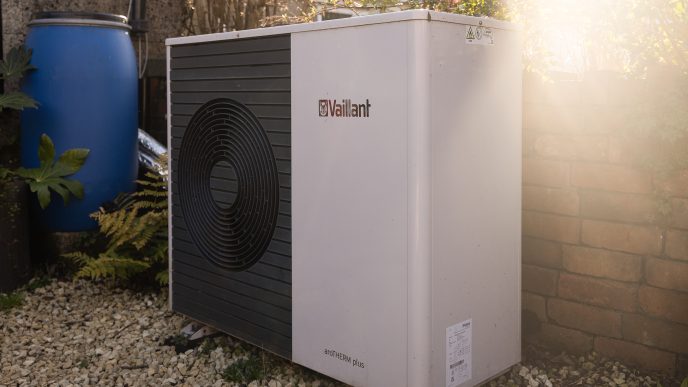
Heat pump technology provides you with a more energy efficient and climate friendly heating system for your home. Read more »
Read more