Laura & Nic’s Fabric Update to 1960s Family Home
How insulation, draughtproofing and ventilation transformed a 1960s semi-detached house in South Gloucestershire.
Summary

Windows & doors

Draughtproofing

Loft & Cavity Wall Insulation

Ventilation
The Home:
- House Type: 1960s semi-detached house
- No. of bedrooms: 3
- Location: Yate South Gloucestershire
“Before the work, our toddler’s room was the coldest in the house. Now it’s the warmest – and the whole home just feels calmer, more comfortable, and nicer to live in.”
– Laura, homeowner
Overview
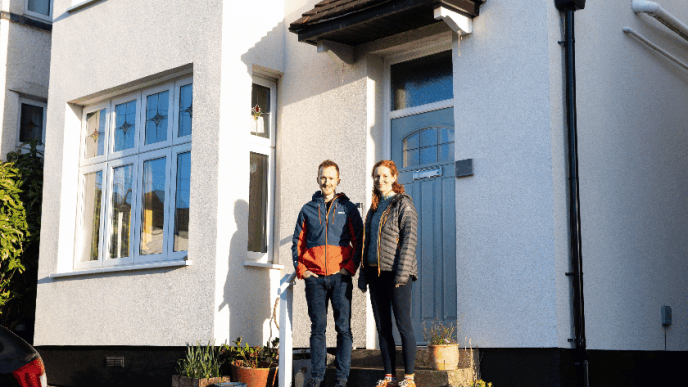
Laura & Nic moved into their typical 1960s semi-detached home in Yate just 2 weeks before their first child was born, so they had a lot of work to do to get their home ‘ready’.
Laura began working for Retrofit West a year later, so she took the learnings from work seriously and started addressing the cold and draught problems at home. By focusing on insulation, draught-proofing and ventilation, the household achieved a warmer, healthier and more comfortable home for their small family.
Background
Like many South Gloucestershire homes, the property was cold, draughty and inefficient. Heat was easily lost through uninsulated cavity walls and loft spaces, poorly sealed openings, and an old PVC front door. With a young child in the home, maintaining a warm and consistent indoor temperature was a priority, particularly as the coldest room was the nursery. Laura and Nic were keen to make improvements but wanted practical, affordable measures that would deliver immediate benefits.
Assessment
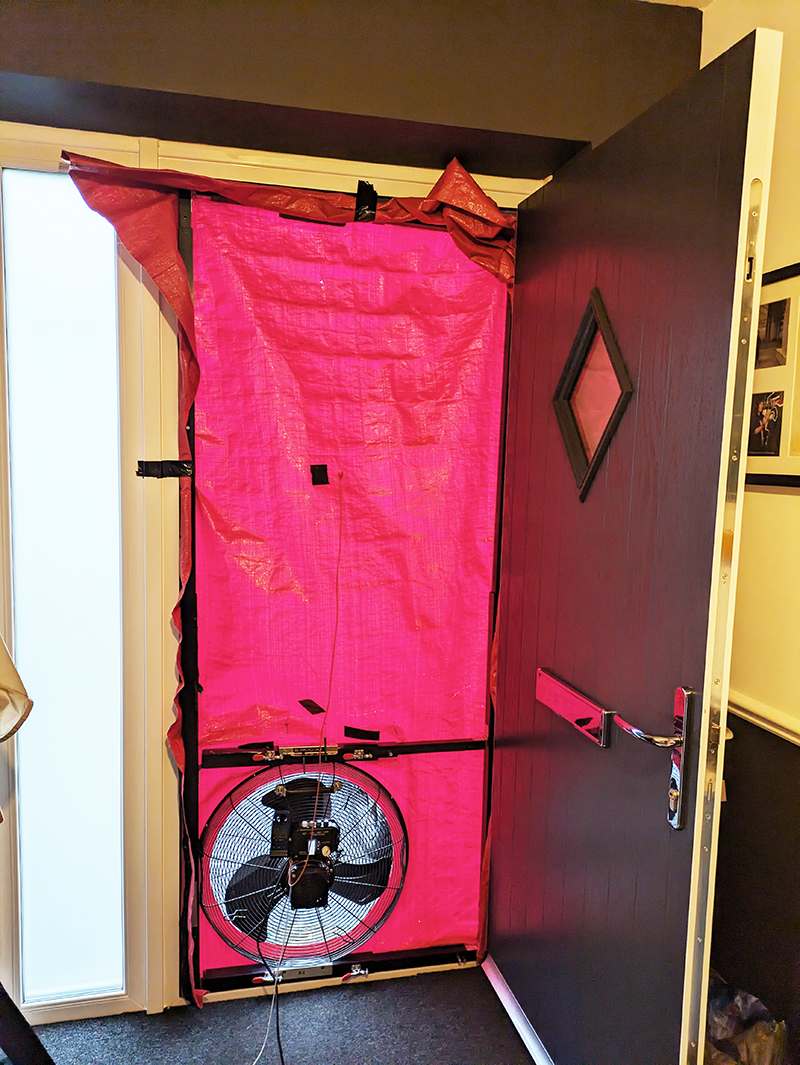
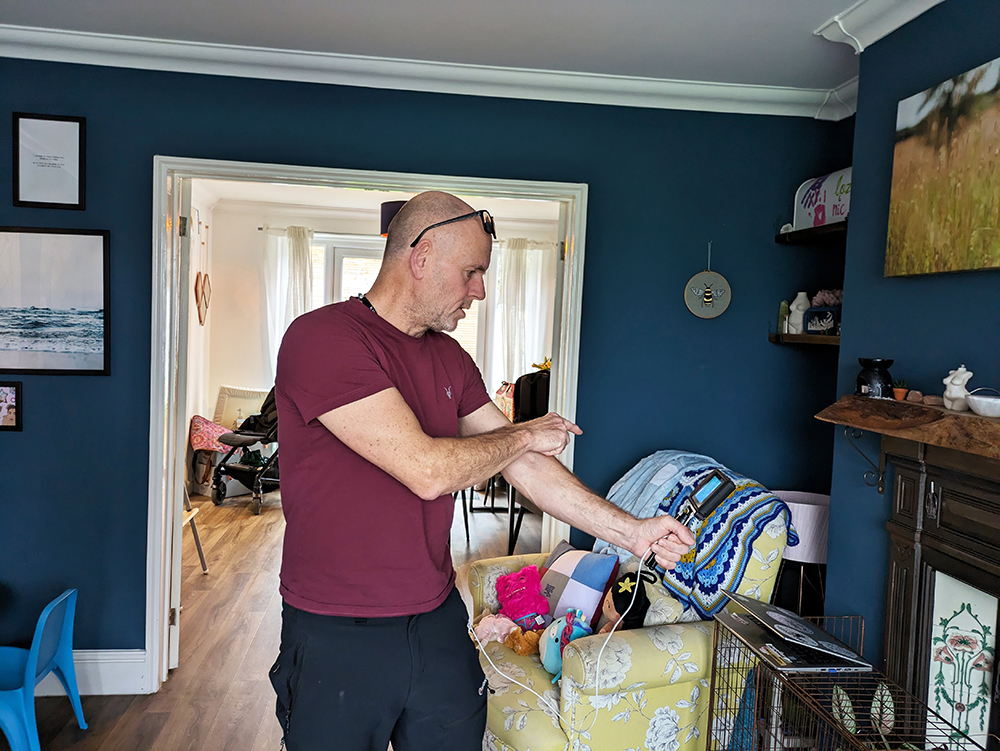
The couple received a thermal imaging assessment and air tightness test, and then a year later, a home visit from Retrofit West. This helped identify where heat was escaping and highlighted key problem areas, including:
- Significant heat loss through the walls and loft
- Multiple draught points throughout the house
- Oversized holes around ceiling light fittings
- Hidden openings inside kitchen cupboards that led directly outside
With all this advice, they were able to use a mixture of grant funding, 0% finance and their own savings to improve lots of problem areas in their home.
Solutions
The following measures were installed:
- Cavity wall insulation
- Loft insulation
- Comprehensive draughtproofing, sealing gaps around light fittings and external penetrations (DIY)
- Replacement front door to improve air tightness
- New windows to the front of the house (the oldest, most leaky)
- Two Positive Input Ventilation (PIV) systems to support air quality and moisture control
- Chimney capping
The Challenge
One of the challenges that arose during the cavity wall insulation installation was that the installer initially required a large ventilation grille on the front of the house because the gas supply had not been formally capped. The fireplace was no longer in use and purely decorative, and the vent would have been an eyesore on the front of the house.
With limited time before the funding window closed, the couple opted to have the chimney professionally capped instead. This provided a practical workaround that met ventilation requirements without compromising the home’s appearance.
Another frustration was an unresolved ventilation issue in the kitchen. The existing extractor fan vents into a cupboard rather than outside, due to the position of the utility room extension. Although this is a clear ventilation problem, it could not be addressed under the grant scheme as it did not fit the required criteria. This will need to be resolved separately.
They also found from their home visit that there was gaps in both their cavity wall insulation and loft insulation. There was a hidden cold spot behind a picture frame causing damp and a thermal bridge in the eaves above the main bedroom causing mould. The contractor has since been out to check the area and is scheduled to refill these areas.
The Results
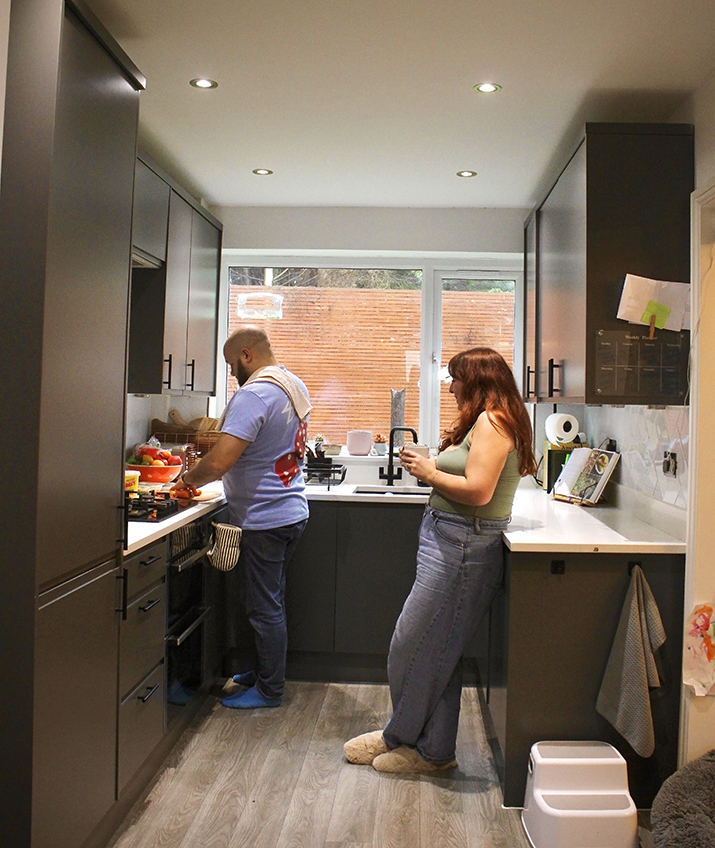
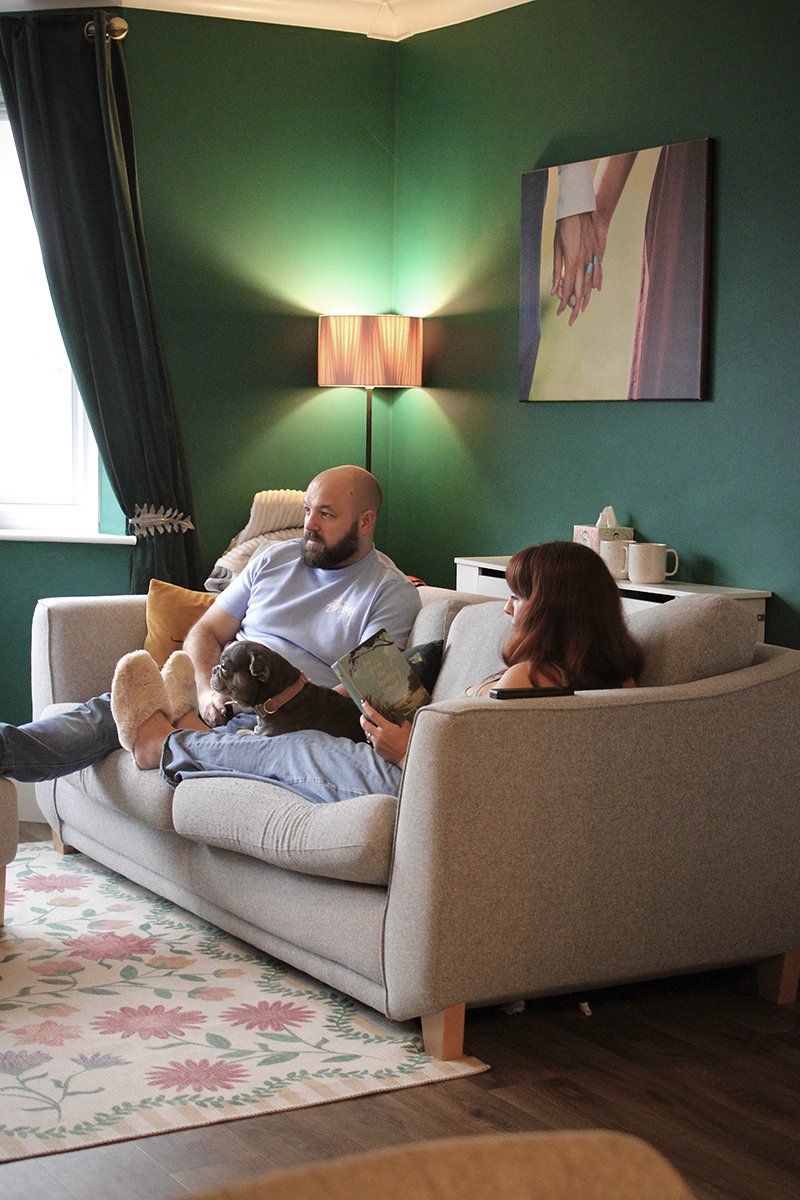
The improvements have had a noticeable and immediate impact. The home is now consistently warmer and easier to heat. They are not noticing draughts, and the chimney cap has also meant that it is not noisy or prone to falling debris when windy anymore, as an added benefit. Their child’s bedroom, previously the coldest room, is now the warmest.
Laura said: “On colder days, we actually get condensation on the outside of the new windows, rather than inside, so it’s nice to know that we’re keeping all the warmth in!
We definitely don’t have the heating as high as we used to in the winter, and in the summer heat wave, we noticed it was cooler indoors than it was before as well.”
Laura and Nic still need to address the kitchen extraction issue and the insulation gaps. But with their comfort significantly improved, they will look to install solar PV within the next few years.

Kirk Goes Fully Electric with a Heat Pump
Kirk replaced his old gas boiler with a heat pump, saving money on energy bills and going fully… Read more »
Read more