A Guide to Air Tightness Assessments
An air tightness assessment measures how much heat your home loses to draughts. You can use the findings to improve your energy efficiency with small but mighty home improvements.
An air tightness assessment uses specialist equipment to gently force air to flow through the fabric of your home. The surveyor can measure how much air is escaping and track down where it’s leaking out. An air tightness assessment gives you actionable steps to improve energy efficiency. They’re often affordable and DIY.
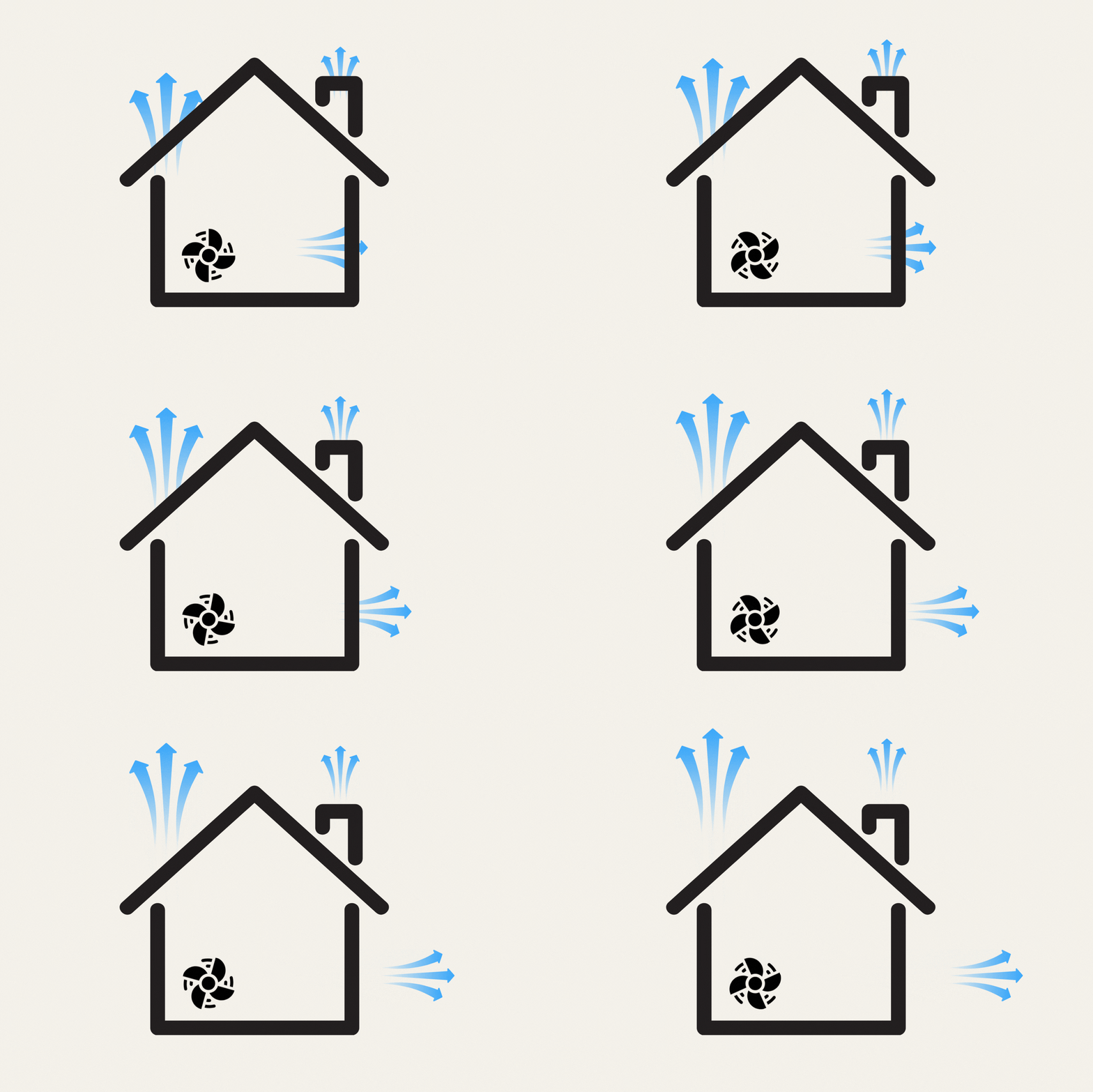
Where has all that heat gone? Warm air escapes from our homes through cracks, little gaps and hard-to-find holes in the building fabric (walls, floors, windows and doors). An air-tight home retains heat better. Rooms stay warm and it takes less energy to do it.
A leaky home means cold and uncomfortable rooms. They are more prone to condensation and mould. This guide will help you decide if an air tightness assessment is right for you.
An air tightness assessment could be right for you if…
• You want to know how warm air is escaping so you can tackle it
• You want to improve your indoor air quality and comfort
But, an air tightness assessment may not be ideal if…
• You want retrofit advice on more than just ventilation
Not sure what kind of assessment you need? Read on for more in-depth advice. You can also call or email our team for free advice on where to start.
Get 50% off an Air Tightness Assessment with a Retrofit West voucher
Retrofit West’s home energy assessment vouchers make it more affordable to get expert retrofit advice.
Browse our trusted providers who offer a range of retrofit services, including air tightness assessments.
What to expect from an air tightness assessment
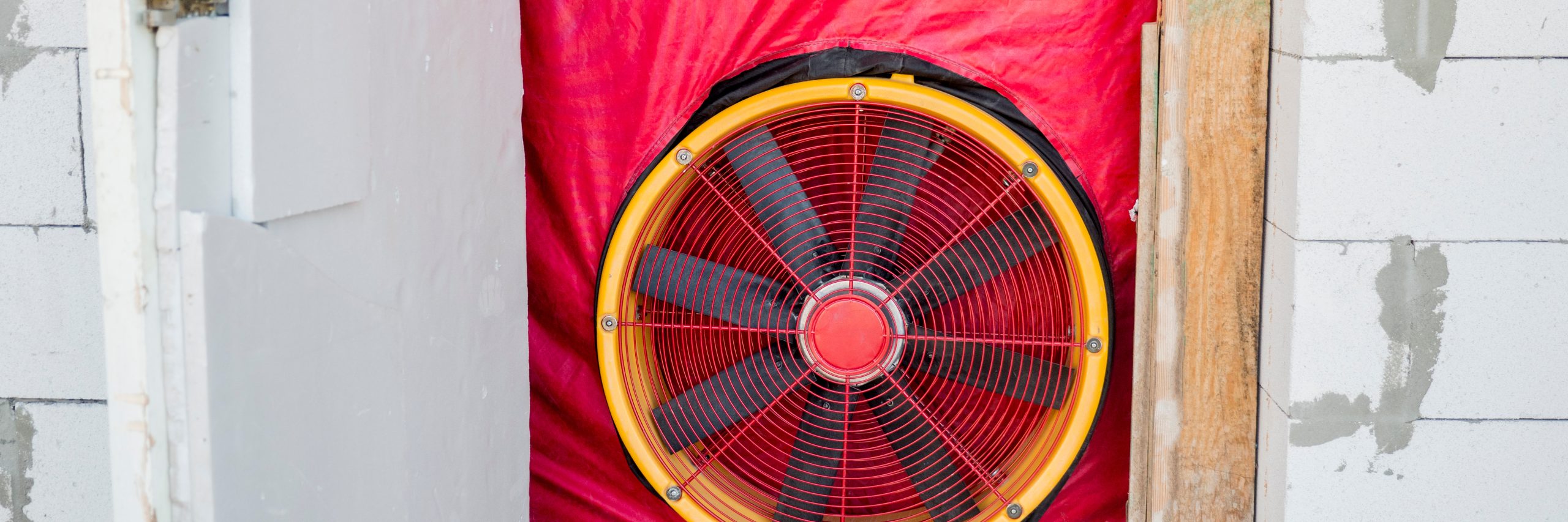
An air tightness assessment is quick and non-intrusive. On the day, the assessor will install a large fan in your doorway. The fan creates a pressure difference relative to the outside air. With all the windows and doors closed (the assessor will seal vents and flues too), it forces the air to find its way out. It’s like inflating a tyre so you can find the puncture. The whole process takes about an hour.
The test gives you an air permeability score for your home. Your assessor can help put the results in context for you. For example, new homes built today must have an air permeability of less than 8 m³/h/m² @50pa.
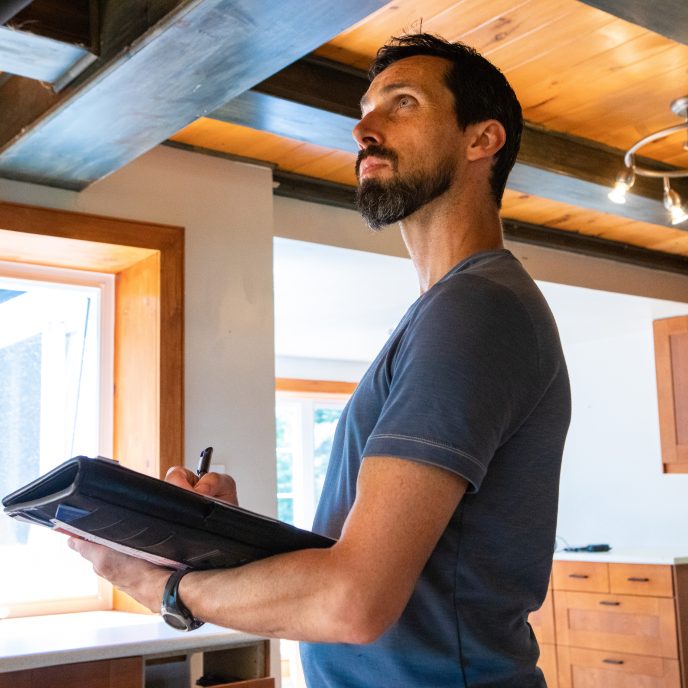
If it’s included in the service, the assessor will walk around the property to investigate the main sources of air leakage. The assessment report can recommend improvements you can make.Where has all that heat gone? Warm air escapes from our homes through cracks, little gaps and hard-to-find holes in the building fabric (walls, floors, windows and doors). An air-tight home retains heat better. Rooms stay warm and it takes less energy to do it.
Got a question about air-tightness or ventilation? Visit our Ventilation Forum and chat for free with professionals today!
Modern Pulse Testing
The blower door test is the established way of testing air tightness. You might also hear about a newer technology called pulse testing.
Pulse testing measures air leakage with a short pulse and at lower pressure. It gets a result in around 10 minutes with 4 Pascals of pressure, instead of 50.
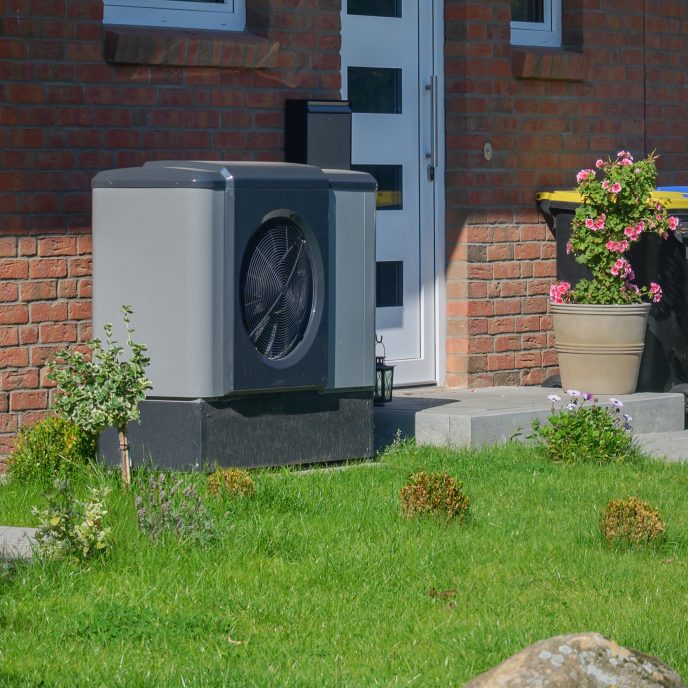
Pulse testing might be the right choice to track how far a retrofit project has improved your air tightness. It’s also a valuable input to heat loss surveys if you want to get a super-efficient heat pump.
But, while a pulse test gives you a measured air tightness score fast, it doesn’t help the surveyor to spot where air is escaping. We don’t currently support this type of test because it doesn’t tell you how to make energy improvements.
Alternative option: thermal imaging surveys
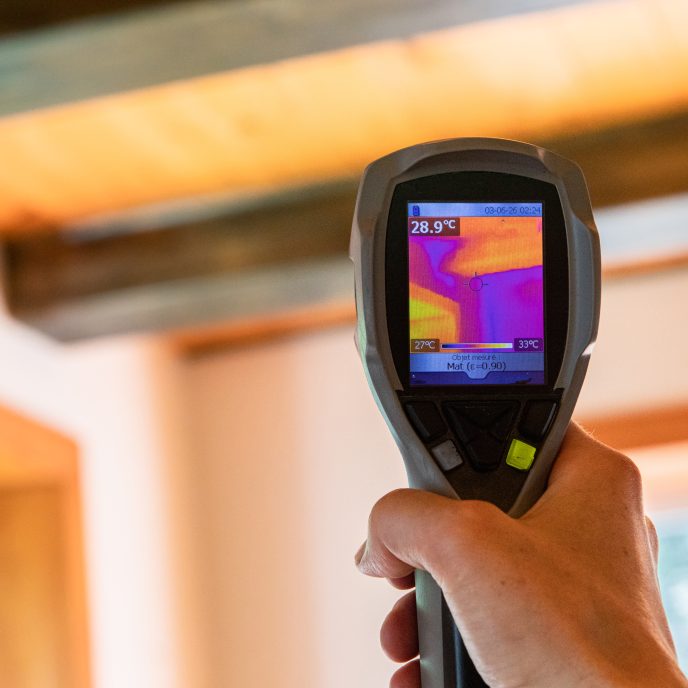
A thermal imaging survey uses a special camera to visualise temperature variations in your home. It can reveal hidden air leaks as well as cold spots.
Thermal imaging surveys are an alternative to air tightness assessments. They can help spot poor insulation, thermal bridging, as well as unwanted air leakage. But, because thermal imaging only works in cooler weather, it isn’t an option all year round where as airtightness surveys are.
Thermal imaging surveys also don’t give you an air permeability rating if that’s what you are looking for. Find out more about thermal imaging surveys here.