Industry Spotlight: Warm Homes Bristol
How can you add insulation to your home using biomaterials, in a sustainable way? Warm Homes Bristol have a solution which can keep you warm in winter and cool in the summer.
Introduction to Warm Homes Bristol
We had a chat with Simon Pole, Founding-Director and Lead Installer at Warm Homes Bristol, about all things retrofit. We asked how Simon navigates the demanding and changing market, what homeowners should be aware of when insulating their homes and what solutions Warm Homes Bristol offer.
Warm Homes Bristol was set up in 2022, following Simon’s 14 years of experience in sustainable projects and environmental advisory roles. As a family-run business, they’re committed to protecting the environment and residents alike.
An accumulation of factors such as the Ukraine war, resulting energy security issues in the UK and the cost-of-living crisis highlighted to Simon the need for local sustainable industry. A reduction in reliance on overseas energy and fossil fuels would enable the UK to become more sustainable in our energy consumption.

Why did you join the retrofit industry?
After 6 years in the home renovation world, Simon recognised that there was a serious damp and mould issue in the Victorian housing stock in Bristol. There’s a crucial need for high standards for insulating buildings – both newly built and maintained. For Simon and the team, welfare standards and preventative action on black mould and extreme damp in properties are priority number one.
Keeping people warm in their houses requires an understanding of how solid brick walls ‘breathe’. The movement of air and vapour through Victorian solid walls is different to how modern cavity walls act in insulating the home, so requires a different approach. Simon states that most of the damp and mould issues come from using insulated plasterboard or other such materials incorrectly, leading to condensation build-up and mould.
Simon’s approach uses materials such as wood fibre and cellulose to combat moisture build-up and work with the vapour movement, rather than preventing it.
What’s your experience of the retrofit market?
It’s challenging. But interest is increasing!
Simon’s found that homeowners are increasingly exploring sustainable options when they’re looking for insulation. It’s interesting and engaging for residents to learn how the green materials work and are valuable to their home – not to mention how they solve damp issues!
Using biomaterials like cellulose and wood fibre is the norm in Scandinavian countries, known for their cold climate and smart construction techniques. By bringing this innovation to the UK, Warm Homes Bristol is broadening the insulation options for homeowners.
An Insulation Case Study:
- Suspended Timber Floors
- Solid Brick Walls
- Standard Bristol Terraced House
- Huge heat loss through the floors
What’s the cellulose solution?
In standard under-floor insulation installations, installers would take up the floorboards, cut insulation board by hand to size and fit them between the joist gaps. This causes problems with draughts, especially in houses where timber floor joists are twisted or there’s lots of pipework to fit around. By no fault of their own, installers don’t solve the draught problem through this method.
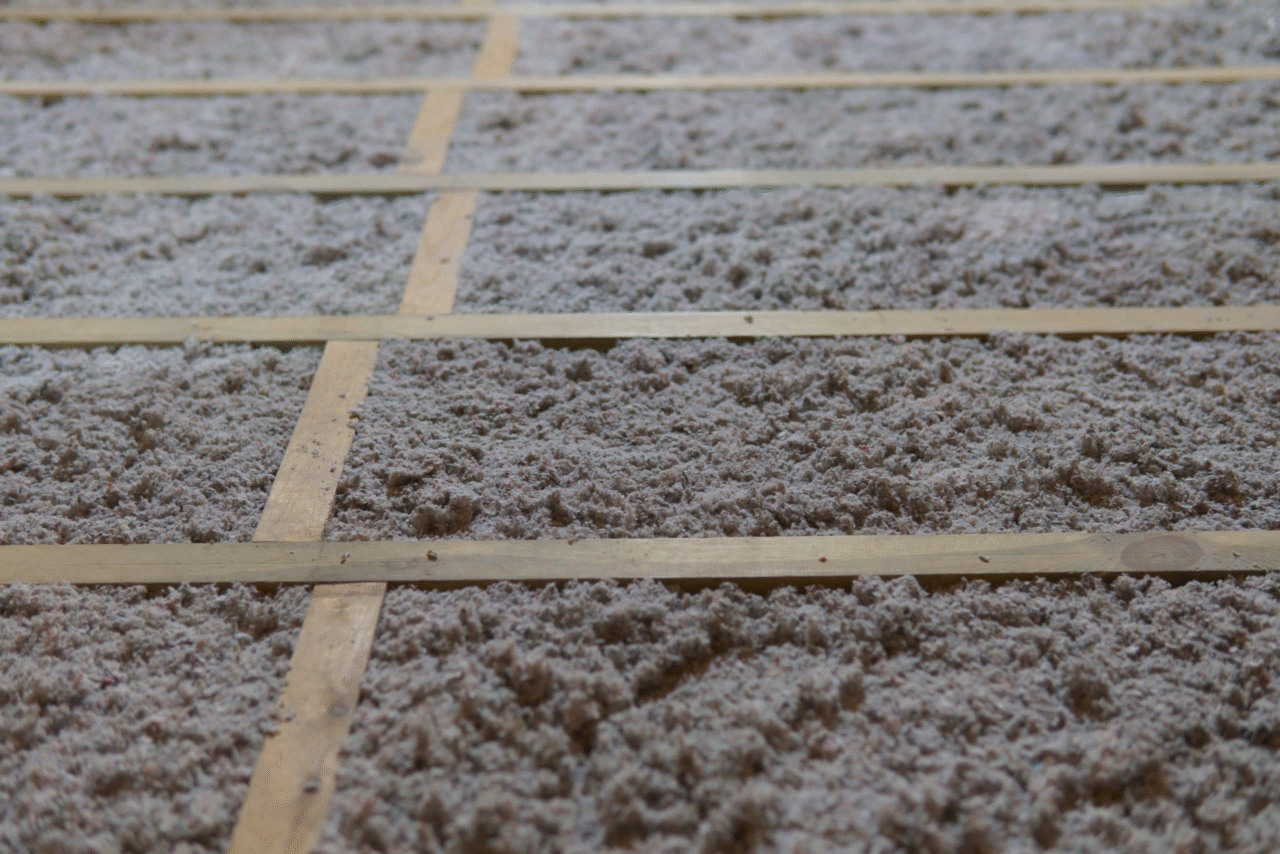
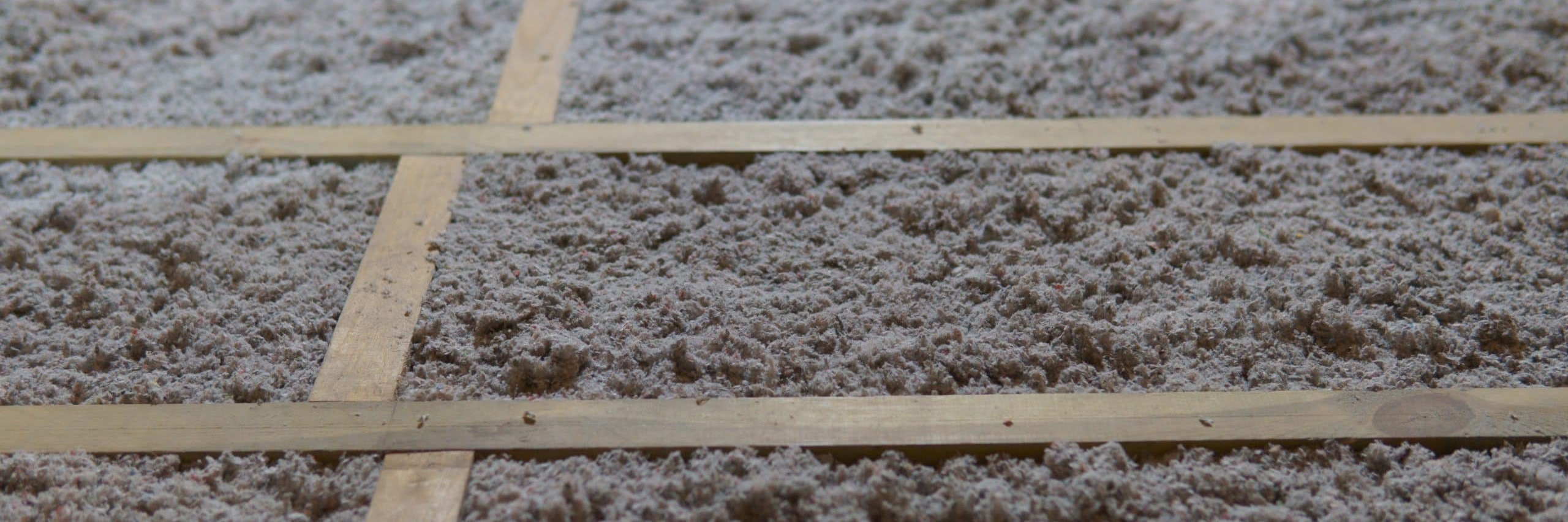
The cellulose solution involves using this plant-based material which can be applied to the underside of floorboards by spraying. The material fills the space by ‘fluffing out’ and effectively blocking air gaps. Normally, only a handful of floorboards need to be removed to gain access to the underfloor area, a bit like keyhole surgery.
Is it fire-safe?
Cellulose has a B-Class Euro rating and can be used with confidence that it will not increase the risk of fire. Tests on houses full of cellulose will give you 30 minutes of extra time in a house fire, the material stopping the spread of flames due to the lack of air within it. Care should be taken around cables and spotlights; Warm Homes Bristol are rigorous in using spotlight covers to allow gaps as a precaution for overheating. Lighting cables and mains are ok to be covered by the insulation material, as normal, but any higher-load cables cannot be covered. Always ask your installer about fire safety.
What about repairs?
After it’s been blown, loose fill cellulose can be removed easily to access any pipework necessary for repairs and maintenance. It can be replaced once repairs have been carried out, or it can be easily disposed of – it’s made of plant fibres so it’s biodegradable.
What about damp?
Cellulose insulation is breathable and doesn’t trap moisture that can rot floor joists. It’s treated with compounds to stop it rotting, burning and deter pests and rodents. A breathable waterproof membrane is also fixed below the insulation to protect it from damp moist air under the floor.
Blocked under-floor ventilation routes is a common problem in the Bristol housing stock, with blocked airbricks and building debris not allowing for effective cross-ventilation underneath floors. This is the main cause of damp and mould. Any debris should be removed before the cellulose solution is applied in order to ensure that the solution works without hindrance.
How much does it cost?
The budget for an average underfloor intervention with cellulose insulation will be about £1,500. This applies to a 25sqm living room with easily accessible underfloor crawl space.
Loft insulation top-ups to a 200mm layer in a 40sqm roof space would be £960. Cellulose material can interact with fibreglass and other materials to fills any gaps for a seamless layer of airtightness. It’s also minimally disruptive, with minimal dust. Warm Homes Bristol also offer hybrid solutions involving rock wool insulation to ensure ventilation gaps within loft spaces, further minimising damp risk.
Where can I find Warm Homes Bristol?
Speak to an Expert
Ready to take the first step towards a healthier home? Speak to a member of our advice team for free!
Book your Call

Industry Spotlight: An Insider’s Perspective on External Wall Insulation
We interviewed Jamel from The Rendering Company to chat about all things retrofit – external wall insulation, ventilation…
Read more
Industry Spotlight: Making Informed Choices with Green Team One
What does good advice look like? Here’s how you can maximise your energy production, how batteries take the…
Read more