Overview
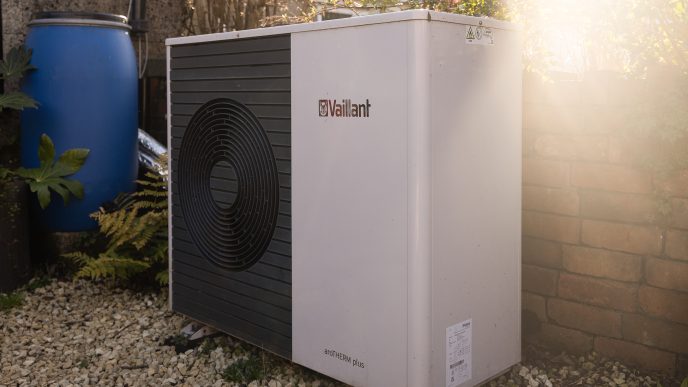
If you think your gas boiler needs replacing, it would be worthwhile considering alternative heating technologies such as a zero emissions boiler, heat pumps or solar water heating. These could greatly reduce your carbon footprint and save on your energy bills long-term. Take advantage of the UK government’s Boiler Upgrade Scheme to finance part of the switch.
Gas or oil boilers are found in over 80% of UK homes, and contribute to a third of the UK’s greenhouse gas emissions. Currently, there are no plans to phase-out gas or oil boilers in existing UK homes but you may want to consider upgrading your heating system in favour of alternatives.
Types of Boiler
- Zero Emission Boilers
- Combi- or combination boilers
- Systems boilers
- Regular boilers (heat only or conventional)
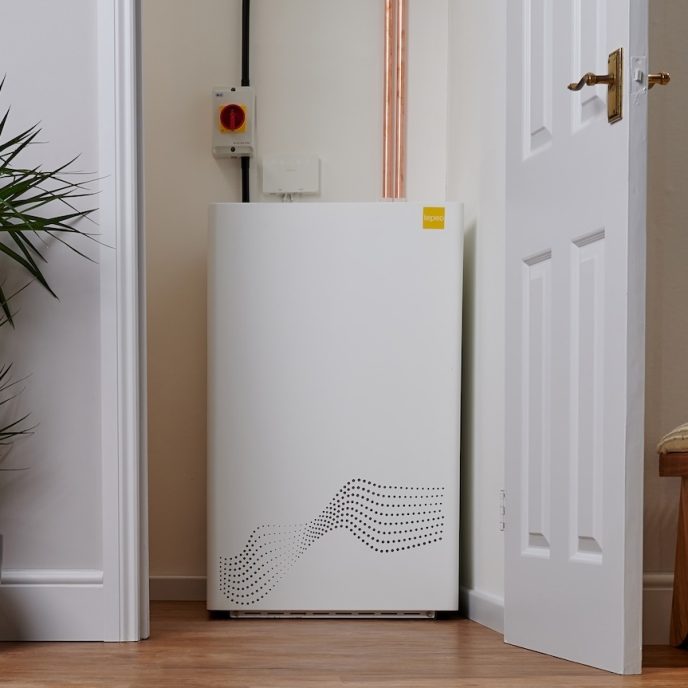
The ZEB by tepeo
A Zero Emission Boiler acts like a battery; powered by electricty, it is able to store energy within a thermal core until it’s needed for heating the home or hot water. ZEBs can fit into existing heating systems, whether they use radiators, underfloor heating and water tanks.
The ZEB can ‘learn’ your heating habits through tepeo’s Smart Charging process – automatically charging up and providing heat for when you need it. It can also be controlled by an app.
How does the ZEB work?
The ZEB is powered by electricity and works like a battery to store energy as heat until it is needed. Rather than heating water on-demand like conventional boilers, the ZEB stores heat to use when it’s required.
Electric heating elements charge up a “core” inside the ZEB – storing a lot of energy in a small footprint. This core doesn’t degrade like a typical chemical battery, meaning it is longer-lasting, reliable and simple.
The heat-management technology then releases the heat to the radiators, underfloor heating and water tank when the thermostat calls for it. By using ‘smart charging’ technology, the ZEB can automatically take advantage of low tariff times to pull electricity from the grid when demand, prices and carbon emissions are low. Also, by learning your habits and using weather data, the ZEB can anticipate your heat usage and adjust your schedule accordingly to save you money and carbon. All of these adjustments happen automatically but can be monitored and controlled via their app.
How does a gas or oil boiler work?
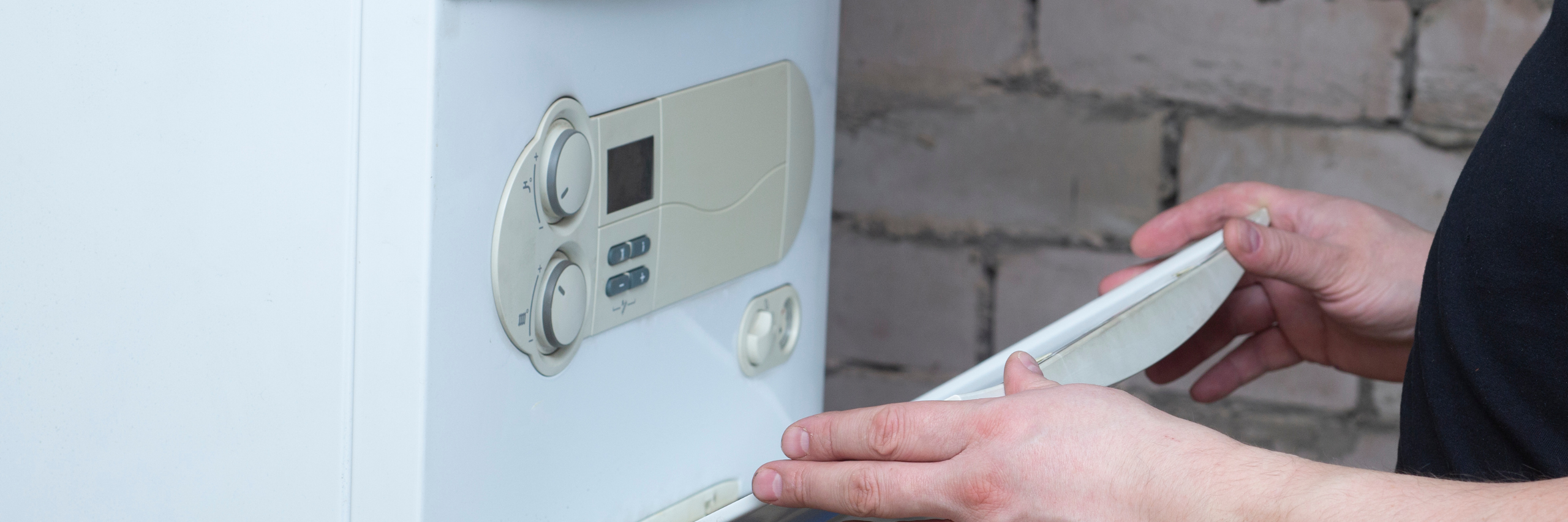
There are 5 main components inside a gas boiler: Gas burner, Heat exchanger, control technology, diaphragm expansion vessel and exhaust pipe. Combination boilers heat water directly from the mains water supply via a heat exchanger. This produces instant hot water.
Traditional boilers heat and store the hot water in a tank before use. There is some heat loss from the hot water tank, so they could be viewed as a less efficient option than a combi- boiler.
How much do boilers cost?
Compared to alternative technologies like heat pumps, gas or oil boilers are typically cheaper to buy upfront but cost you more in the long-term. New boilers typically cost up to £5000, including installation. Here’s a quick comparison table –
| Gas or Oil Boiler | Heat Pump |
| Quick & easy installation | Installed typically between 2-3 days, there are longer lead times due to fewer qualified installers. |
| New boilers are typically 90% efficient, which is an improvement on past boilers | Heat pumps are typically 300% efficient (they produce around 3 times more energy than they use) |
| Life span of up to 15 years | Life span of up to 25 years |
| Boilers for UK new-builds are being banned by 2025 | Grant schemes are available to help buyers purchase heat pumps with significant cost savings |
Boiler Maintenance
- Get your boiler professionally serviced once each year
- Regular check-ups on the vent connection and heat exchanger
- Check regularly for noise, vibration, debris, leaking or blockages
- Bleed your radiators once per year
- Flush out your boiler regularly so rust, dirt and debris
- Ensure that the boiler flame is blue
Boiler FAQs
How often should I replace my boiler?
Typically, boilers last between 10-15 years. British Gas have listed signs you should replace your boiler.
How do I know if my boiler needs repairing/replacing?
British Gas have listed signs you should replace your boiler. These include odd smells, noise and frequent breakdowns.
How do I know if my boiler is economical?
Your boiler will usually have a efficiency rating – from A-G. An A rating means that your boiler is 90% efficient (loses 10% of energy when heating your home). G ratings mean that 70% of the energy can be lost, this is inefficient.
Here’s a few steps you can take to maximise your boiler’s efficiency.
How much does a Zero Emission Boiler cost?
A Zero Emission Boiler from tepeo costs £6,000 including VAT and delivery. Installation costs are additional and will vary by property. There are currently no government grants or subsidies available for the ZEB, though tepeo is campaigning for it to be included in future funding schemes.
Is a Zero Emission Boiler cheaper to run than a gas boiler?
Whether a Zero Emission Boiler is cheaper to run than a gas boiler depends on your electricity tariff and how much heating your home requires. The ZEB uses smart charging to take advantage of cheaper off-peak electricity, which reduces running costs compared to heating at standard rates. As the grid becomes greener and off-peak tariffs become more accessible, the running cost case for the ZEB is likely to improve over time.
Can a Zero Emission Boiler replace my existing gas boiler?
A Zero Emission Boiler can replace an existing gas boiler in most homes without changes to pipework or radiators. You will need a hot water cylinder if you do not already have one, as the ZEB stores hot water rather than heating it on demand. A survey is recommended before installation to confirm suitability for your specific property.
Why would I choose a Zero Emission Boiler over a heat pump?
A Zero Emission Boiler is worth considering when a heat pump is not a practical option. This might be the case if your property has limited outdoor space, if noise is a concern, if your home is not well suited to the lower flow temperatures heat pumps require, or if the disruption and cost of a full heat pump installation is prohibitive. The ZEB is a simpler swap that works with your existing system.
Does a Zero Emission Boiler work with solar panels?
A Zero Emission Boiler can work well alongside solar panels, particularly with a battery storage system. The smart charging function can be configured to prioritise cheap or renewable electricity, meaning that if you generate solar power during the day and store it in a home battery, the ZEB can use that stored electricity to charge up. This can reduce both running costs and the carbon footprint of your heating further.


Do electric boilers work?
With the UK's commitment to fully decarbonise the electricity grid by 2035, many homeowners are exploring electric heating… Read more »
Read more