Overview
Heat pumps are the most efficient way to heat a home using electricity. Unlike a boiler which burns fuel to generate heat, a heat pump moves heat from one place to another — extracting it from the air or ground outside and transferring it into your home. For every unit of electricity they use, heat pumps typically produce three to four units of heat, making them significantly more efficient than any direct electric heating system.
Heat pumps produce no direct carbon emissions at the point of use. As the electricity grid becomes greener through the growth of renewable energy, their carbon footprint reduces automatically over time.
Why heat pumps are efficient and eco-friendly
Heat pumps can produce more energy than the electricity they consume, because they use electricity to move heat, not to generate it. The ratio of the heat output to the electricity input is called the coefficient of performance (COP). The higher the COP, the more efficient the heat pump is. For example, a heat pump with a COP of 4 can produce 4 kWh of heat for every 1 kWh of electricity it uses.
Heat pumps can also reduce carbon emissions, because they use electricity instead of gas to heat the building. Electricity can be generated from renewable sources, such as wind, solar, or hydro, which do not emit carbon dioxide. Gas boilers, on the other hand, burn natural gas, which is a fossil fuel that releases carbon dioxide into the atmosphere, and is the major component to climate change.
Types of heat pumps
There are different types of heat pumps for households looking to upgrade their heating system. The most common types are:
- Air source heat pumps (ASHPs), which use the outside air as the source and the indoor air or water as the destination. They are easy to install and suitable for most buildings.
- Ground source heat pumps (GSHPs), which use the ground or water as the source and the indoor water as the destination. They are more efficient and consistent than ASHPs, but they require more space and installation costs.
- Hybrid heat pumps, which combine a heat pump with a gas boiler. They can switch between the two systems, depending on the temperature and the demand. They are more flexible and reliable than standalone heat pumps, but they still emit some carbon dioxide.

Quick Heat Pump Comparison
| Air Source Heat Pump | Ground Source Heat Pump |
|---|---|
| Less Expensive | More expensive, particularly when boreholes are necessary |
| Requires an outdoor unit | Requires an indoor unit |
| Minimal outdoor space need | Extensive digging or larger outdoor space needed |
| Lower heating efficiency | Higher heating efficiency |
Air Source Heat Pumps (ASHP)
What is an air source heat pump?
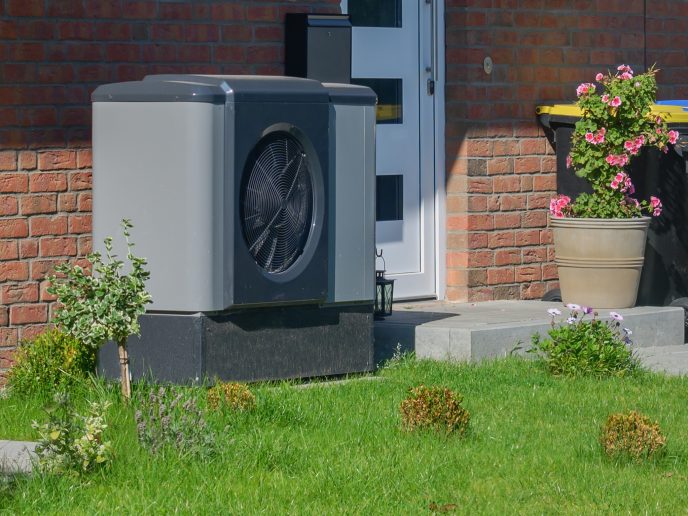
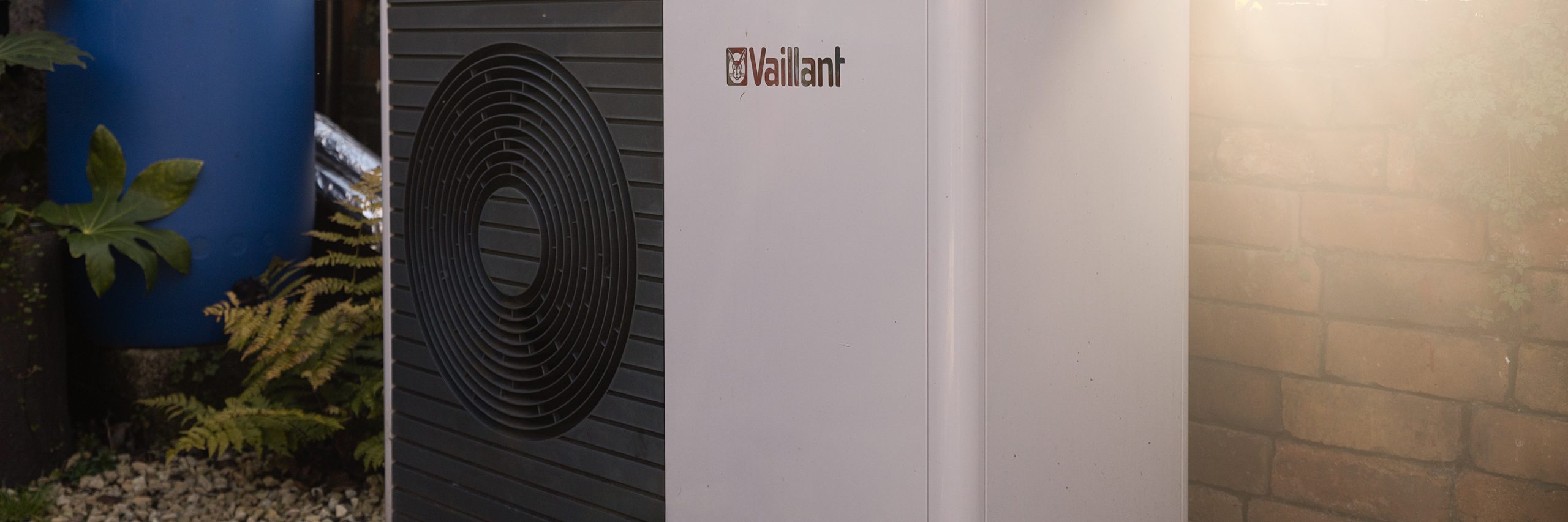
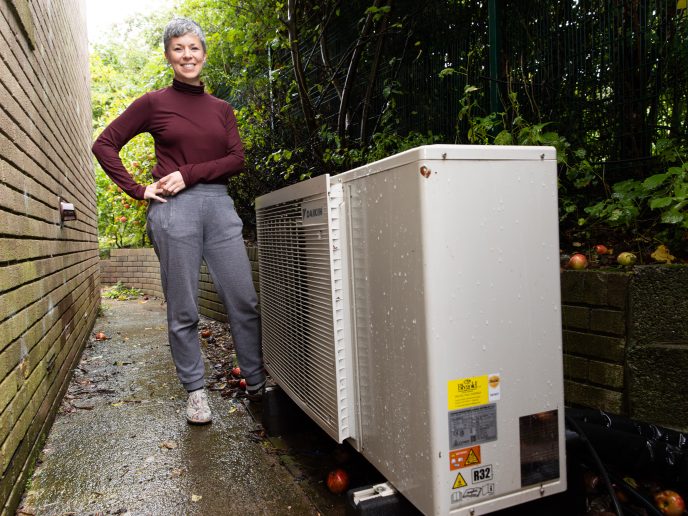
An air source heat pump (ASHP) is a device that can heat your home and water by taking heat from the air outside. It can work even when it is very cold outside, and it is better for the environment and more efficient than a gas boiler. An ASHP can help you save money on your energy bills, reduce your carbon emissions, and access renewable energy incentives.
How does an air source heat pump work?
An ASHP uses a refrigerant, a fluid that can switch between liquid and gas states, to transfer heat from one place to another. The refrigerant moves in a closed loop, going through four main parts: an evaporator, a compressor, a condenser, and an expansion valve.
-
- The evaporator takes heat from the air outside and turns the refrigerant into a low-pressure gas.
- The compressor raises the pressure and temperature of the refrigerant gas, making it hotter than the air or water inside the house.
- The condenser gives the heat from the refrigerant gas to the air or water inside the house, and changes the refrigerant back into a liquid.
- The expansion valve lowers the pressure and temperature of the refrigerant liquid, making it colder than the air outside.
The cycle repeats, constantly moving heat from outside to inside. The heat pump can also do the opposite, cooling the house by moving heat from inside to outside.
What are the benefits of an air source heat pump?

Reduce Energy Bills If you replace an electric, oil, LPG, or coal system

Lower Carbon Emissions Uses electricity instead of gas to heat your home and water

Provides heating and cooling Depending on the season and preference

Can heat home and water simultaneously Depending on preference

It can last for 20 years or more with the right maintenance!

Can help you access financial incentives such as the Boiler Upgrade Scheme
Read the Real Story
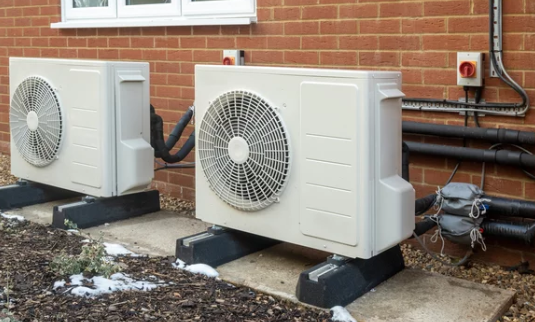
Katherine made the smart switch from a traditional boiler to air source heat pump. Here are the challenges, results and benefits of her project…
Read Here
Ground Source Heat Pumps (GSHPs)
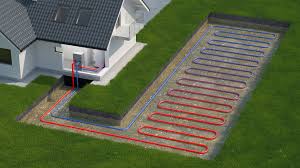
A ground source heat pump extracts heat from the ground using a loop of pipes buried either horizontally in trenches or vertically in boreholes. The temperature a metre or more below ground stays relatively stable year-round, typically between 8 and 12 degrees Celsius, which makes GSHPs slightly more efficient and consistent than air source heat pumps.
Horizontal ground loops are laid at depths of 1 to 2 metres and require a significant area of garden — typically around twice the floor area of the property being heated. They are most practical in rural settings with sufficient land.
Boreholes are drilled vertically to depths of between 15 and 200 metres, requiring much less surface area but at a higher cost. An average UK home typically requires one or two boreholes. A ground source heat pump has no outdoor unit – the evaporator and condenser are enclosed in a single indoor unit.
How Much Do Heat Pumps Cost?
Heat pump installation costs vary depending on the type of system, the size of the property, and the complexity of the installation.
Air source heat pumps typically cost between £8,000 and £15,000 installed for a typical home, before any grants. The Boiler Upgrade Scheme provides a grant of £7,500 toward the cost of an air source or ground source heat pump, which significantly reduces the net cost.
Ground source heat pumps are more expensive, typically between £15,000 and £35,000 installed depending on whether horizontal trenches or boreholes are used.
Running costs depend on your existing heating system, your home’s insulation level, and your electricity tariff. Homes replacing oil, LPG, or electric heating typically see the most significant bill savings. Homes replacing gas may see modest savings or broadly similar running costs, though this gap is narrowing as gas prices remain high and heat pump technology improves.
Heat Pump FAQs
Is My Home Suitable for a Heat Pump?
-
Heat pumps work in most homes, but they work best when certain conditions are met. Key factors to consider:
Insulation: A well-insulated home requires less heat overall, which allows the heat pump to run at lower, more efficient flow temperatures. It is worth improving insulation before or alongside a heat pump installation where possible, though it is not a strict prerequisite.
Radiators or underfloor heating: Heat pumps work at lower flow temperatures than gas boilers — typically 35 to 55 degrees Celsius rather than 65 to 75. This means radiators may need to be upsized if they are too small to deliver enough heat at lower temperatures. Underfloor heating is ideal as it naturally suits lower flow temperatures. A heat pump survey will identify whether radiator upgrades are needed.
Hot water cylinder: Heat pumps require a hot water cylinder to store heated water. If you currently have a combi boiler with no cylinder, space for one will need to be found as part of the installation. Cylinders are typically around 80cm by 80cm in footprint.
Outdoor space: Air source heat pumps need a suitable outdoor location for the unit with good airflow and reasonable distance from noise-sensitive areas. Ground source heat pumps need either sufficient garden space for trenches or access for borehole drilling equipment.
How much space do I need to install a heat pump?
ASHP: Adequate space outside your home is essential for installing the ASHP unit, whether mounted on a wall or positioned on the ground. It is crucial to ensure the unit enjoys proper air circulation and is situated away from areas sensitive to noise.
GSHP: For a Ground Loop system, the size of the array is dependent upon the building’s heat load, the soil type, and its moisture content (preferably wet for superior heat retention and conduction). Usually a horizontal ground loop is often impractical in urban settings due to limited space. Even in rural areas, installing a horizontal array may necessitate extensive garden excavation.
If space is limited, it’s possible to extract heat from the ground by drilling vertical boreholes. This is typically more expensive and requires a depth between 75-200 metres deep.
What heating system do I need?
A heat pump works best with underfloor heating or oversized radiators, as these can deliver sufficient heat at the lower flow temperatures heat pumps typically operate at. Standard radiators sized for a gas boiler may need to be upsized as part of the installation. Your installer will carry out a heat loss calculation for each room and identify any radiators that need upgrading. Getting this right is important for the heat pump to perform efficiently.
Do I need a hot water cylinder and backup heating source?
Yes, a hot water cylinder is required with a heat pump. Heat pumps heat water and store it in a cylinder rather than heating it on demand as a combi boiler does. If you currently have a combi boiler and no cylinder, space will need to be found for one as part of the installation. A standard hot water cylinder is typically around 80cm by 80cm in footprint and can usually fit in an airing cupboard or utility area.
Do I need planning permission?
Air source heat pumps do not require planning permission in most cases, as they are covered by permitted development rights. However, there are limits — for example, units must not be installed on a wall or roof that faces a highway, and there are restrictions for listed buildings and some conservation areas. It is always worth checking with your local planning authority before proceeding. Ground source heat pumps generally do not require planning permission either, though borehole drilling may require notification in some areas.
Who can install a heat pump?
You must use an experienced and certified Microgeneration Certification Scheme (MCS) installer to ensure that the ASHP is measured and installed correctly and safely. You should also ask for a warranty and a maintenance contract, to protect your investment and prolong the lifespan of the ASHP.