When we think about making a home more energy efficient, we tend to focus on keeping heat in. But ventilation — the controlled flow of fresh air through your home — is just as important. Get it wrong and you risk damp, mould, poor air quality, and the health problems that come with them.
Overview
The key principle in retrofit is simple: build tight, ventilate right. Sealing up draughts and adding insulation makes your home more airtight, which is good for warmth and energy bills. But a more airtight home needs a proper ventilation strategy to replace the stale air that used to escape through gaps. Without one, moisture builds up, condensation forms, and mould can follow.
There are five main approaches to ventilating a home, ranging from simple and low-cost to highly efficient and more complex to install. The right choice depends on how airtight your home is, your budget, and how much disruption you are willing to accept.
Types of Ventilation
Natural
One of the easiest ways to ventilate a home is by simply opening the windows. While this may seem like an obvious solution, it’s surprisingly easy to overlook. Some people avoid opening windows due to concerns about rain or security, although window restrictors can address these worries. However, relying solely on open windows can result in excessive heat loss and may not ensure that fresh air reaches all areas that require ventilation.
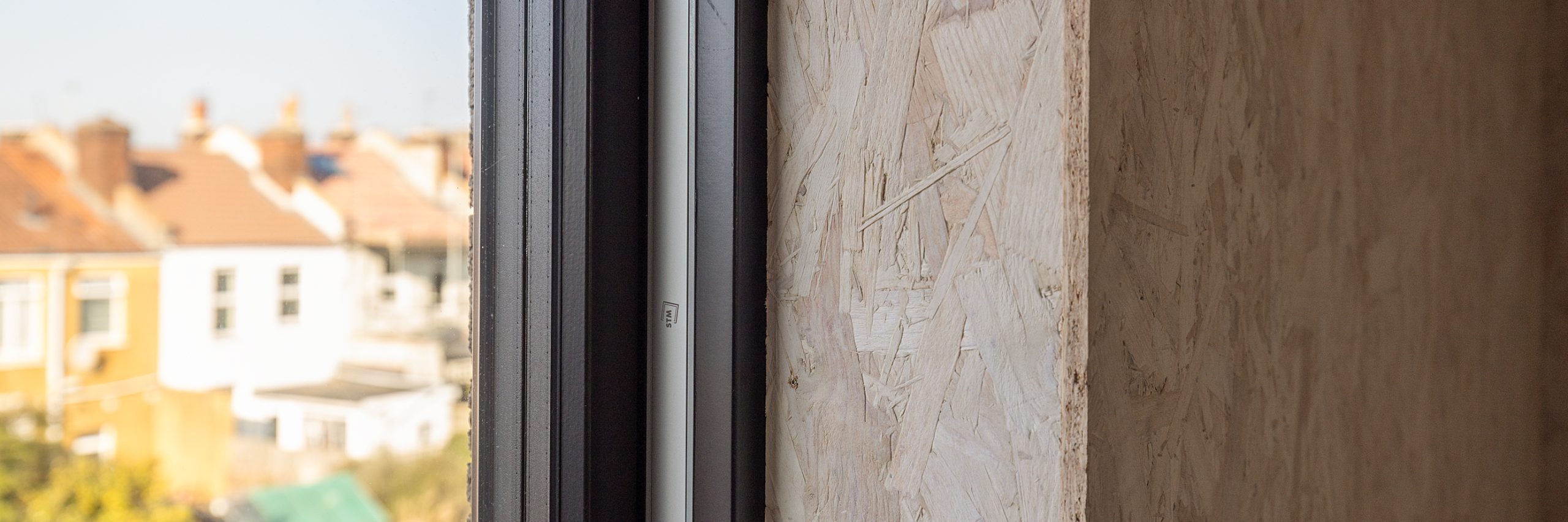
Common background vents, such as trickle vents in window heads and wall vents in older properties, play a crucial role in maintaining adequate airflow. Another effective solution is the use of door undercuts, which allow air movement between habitable and wet rooms even when internal doors are closed. Typically, a 10mm gap is required for standard door widths, but adjustments may be necessary. These measures are often considered as part of wider ventilation strategy, which form a more cohesive and comprehensive approach to home ventilation.
Passive Stack Ventilation (PSV)
This ventilation method relies on the natural movement of air, known as the ‘stack effect.’ Warm air naturally rises, creating a vacuum that draws in cooler air at lower levels. Vents are strategically placed in rooms, like bathrooms and kitchens, that require fresh air to replace moist or odorous air. The warm, moist air is directed upward through ducts and expelled at or above the roof ridge. Meanwhile, fresh air enters through background ventilators in ‘dry rooms,’ typically through trickle ventilators in window frames or through the building fabric in less airtight structures. These vertical ducts run from the ceilings in kitchens and bathrooms to outlets in the roof. The grilles in each of these rooms can be adjusted to open based on the Relative Humidity (RH), providing a demand-controlled PSV.
Benefits & Characteristics
- No running costs
- No electrical connections required however is sensitive to poor installation
- Silent operation
- Provides continuous extract ventilation
- Installation subject to architecture/construction of dwelling
Intermittent Extract Ventilation (IEV)
IEVs consist of extract fans commonly seen in wet rooms such as kitchens, bathrooms, and utility rooms usually controlled by a light switch. These are best combined with background ventilators called trickle vents, installed within the window head to provide a balance of fresh air supply.
Benefits & Characteristics
- Relatively cheap solution
- Simple to install and operate
- Can quickly remove indoor air pollutants
- Produce low levels of noise
- Need to be maintained and eventually replaced (typically 6 years)
- Not suitable for very air tight or damp prone properties
Mechanical Extract Ventilation
Centralised mechanical extract ventilation (MEV) systems utilise a single fan unit, often positioned in the loft, to continuously extract air from multiple rooms. This ongoing extraction maintains a consistent background level of ventilation, with the added benefit of the system being able to enhance ventilation rates when humidity levels rise, thanks to incorporated humidity sensors. The use of a solitary fan unit not only reduces drafts but also contributes to lower energy consumption and noise levels.
Decentralised mechanical extract ventilation (dMEV) functions similarly to intermittent extract ventilation systems, with individual fans in spaces like bathrooms, utility rooms, and kitchens. Unlike systems activated by a switch, these fans provide constant low-level ventilation, increasing when humidity is high, resembling centralised MEV. Installation costs for decentralised MEV are lower, and it requires less space than centralised MEV. Hybrid systems, combining MEV with passive ventilation, are also an option.
When selecting a system, consider your budget, retrofitting ease, and building airtightness. Homes with high airtightness may benefit from continuous and mechanically assisted ventilation, while less airtight homes, common in older structures, might find a simpler system more suitable.
Benefits & Characteristics
- Provides continuous background ventilation
- Easy to understand and operate
- Occasionally difficult to accommodate ductwork
- Installation requires commissioning
Mechanical Ventilation with Heat Recovery (MVHR)
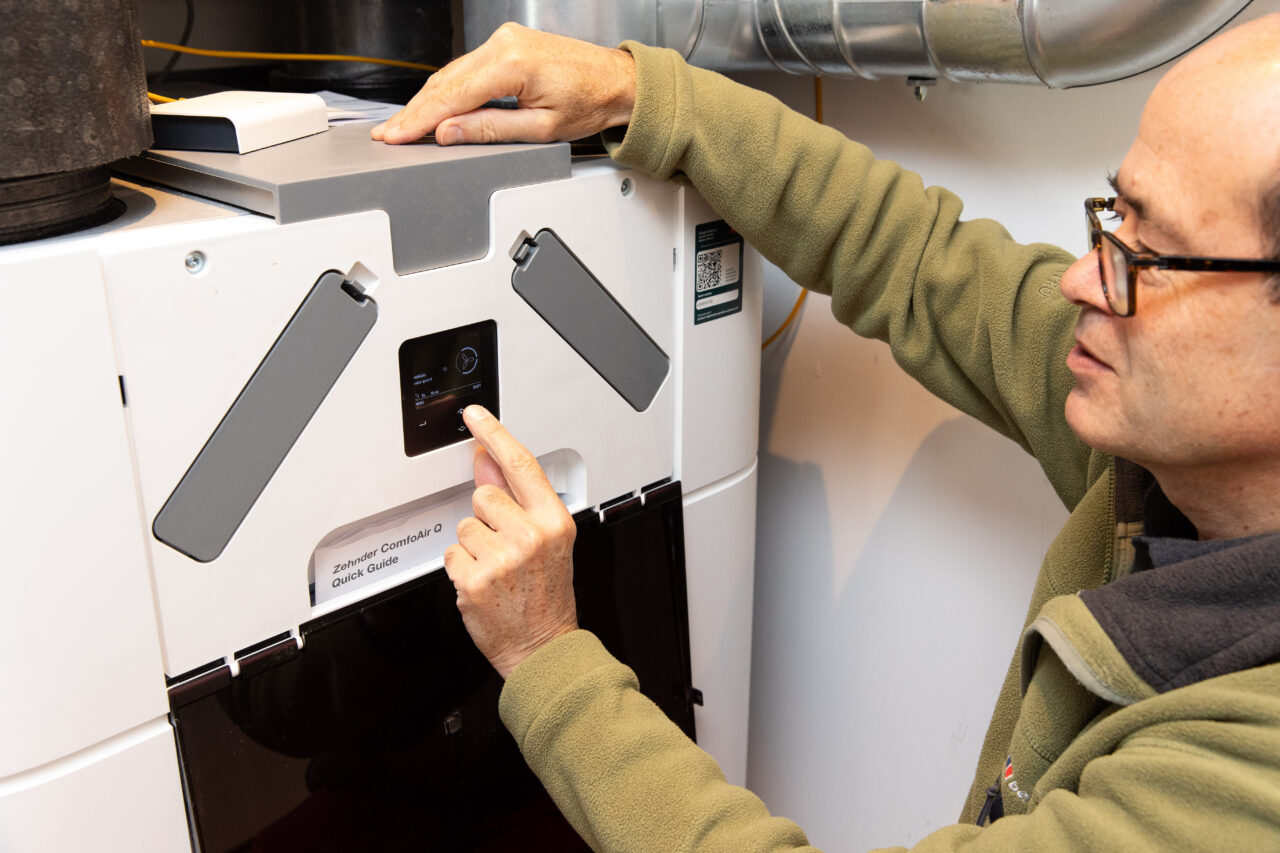
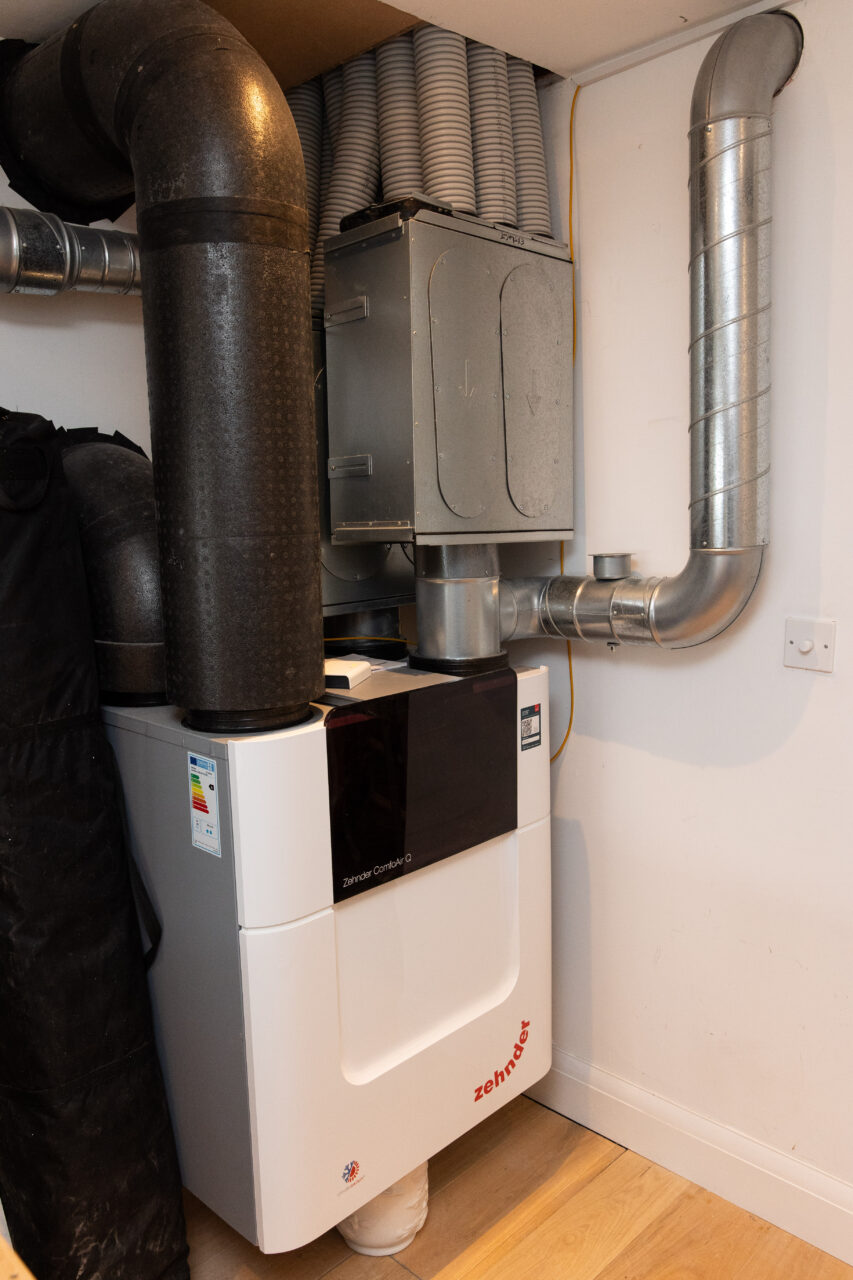
These systems operate similarly to centralised MEV systems, but extracted air is passed through a heat exchanger which warms up the incoming fresh air. This leads to improved energy efficiency and comfort, as the air entering the house is warm. But they’re not cheap and the installation is complex and requires a lot of space. For this reason, MVHR systems are more commonly found in newbuilds or whole-house retrofits. Decentralised MVHR systems are also available, consisting of multiple fans with individual heat exchangers.
Why Ventilation Matters for Your Health
Moisture & Health
It’s important to understand the health risks linked to living in cold homes with poor ventilation. Living in a home with inadequate air circulation can lead to a build-up of moisture, pollutants, and allergens that affect respiratory health over time.
- Damp and mould – when moisture in the air has nowhere to go, it condenses on cold surfaces. If relative humidity on a surface exceeds around 80%, mould can begin to grow. Mould spores are linked to asthma, bronchitis, and other respiratory conditions.
- Poor indoor air quality – cooking fumes, cleaning products, VOCs from furniture and paint, carbon dioxide from breathing, and radon from the ground all accumulate in poorly ventilated homes. Fresh air dilutes and removes these pollutants.
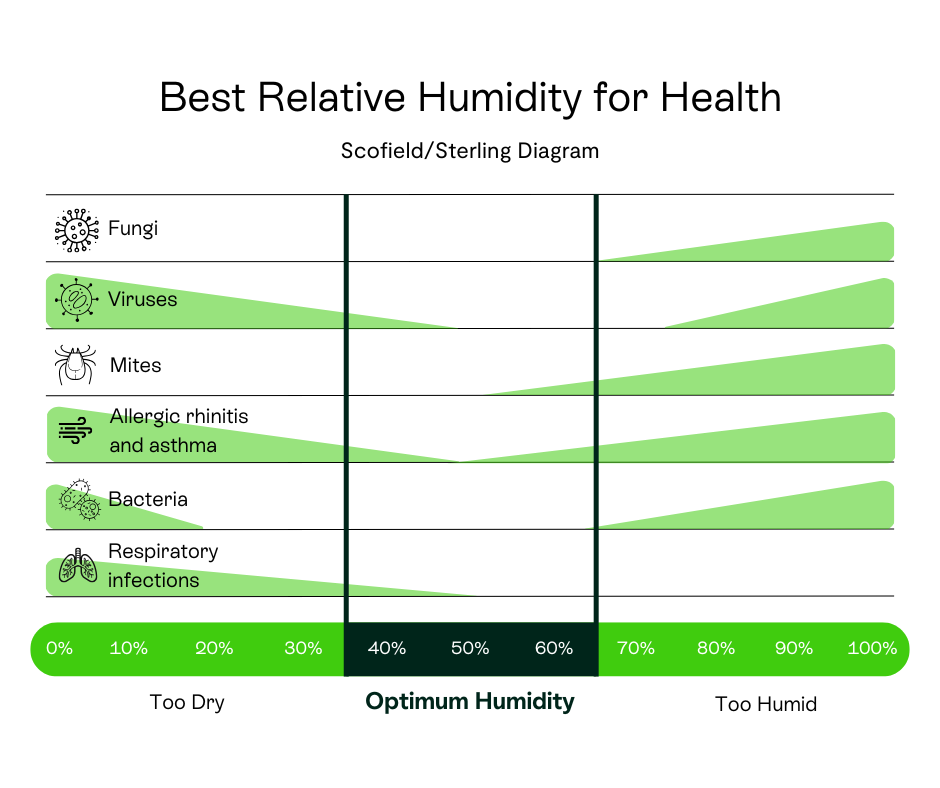
- Dust mites and pests – house dust mites and silverfish thrive in humid conditions. Keeping relative humidity between 40% and 60% is the most effective way to discourage them.
As illustrated in chart below, the goal is not to ventilate as much as possible — too little humidity causes its own problems, including dry skin, irritated airways, and static electricity. A balanced indoor humidity of around 50% is the target.

Ventilation FAQs
Will better ventilation stop damp and mould?
Good ventilation significantly reduces the risk of condensation damp and mould by removing moist air before it has a chance to settle on cold surfaces.
However, ventilation alone is not always the complete answer – if your home has penetrating damp (moisture coming in through walls or the roof) or rising damp, these need to be addressed separately.
A home energy assessment will help identify the source of any damp before deciding on the right solution.
Will ventilation make my house colder?
A well-designed ventilation system should not make your home noticeably colder.
MVHR recovers most of the heat from extracted air and returns it to the incoming supply.
PIV systems introduce air at a low rate that does not significantly affect room temperature.
Intermittent extract fans only run when needed.
The main cause of heat loss through ventilation is opening windows for long periods and controlled mechanical systems are far more efficient than this.
Do I need to upgrade my ventilation if I add insulation?
You almost certainly need to upgrade your ventilation if the insulation significantly increases your home’s airtightness. More airtight homes rely on ventilation systems to do the work that draughts and gaps used to do naturally. If you insulate without addressing ventilation, you risk a build-up of moisture, condensation, and mould. A trusted installer should consider ventilation as part of any insulation project rather than treating it as an afterthought.
What's the difference between airtightness and ventilation?
‘Airtightness’ principles mean that we are trying the reduce the airflow in and out of your home via unknown or unwanted leaks (cracks, gaps around windows/doors).
However, ‘ventilation’ refers to purposeful air exchange between external and internal spaces to maintain a healthy environment inside the home. Ventilation is important because it replaces stale air which can cause inhabitants harm (such as, carbon dioxide, cooking smells, water vapour and dust).
What is MVHR and is it worth it?
Mechanical Ventilation with Heat Recovery (MVHR) is a whole-house system that continuously extracts stale air and supplies fresh air, recovering most of the heat from the outgoing air in the process. It is the most energy-efficient ventilation option available for homes.
Whether it is worth it depends on your home – MVHR performs best in highly airtight properties and is most cost-effective when installed as part of a deep retrofit or new build. In a leaky older property it will not perform as well, and the installation cost and complexity may not be justified. A ventilation specialist can advise whether your home is a good candidate.
How much does MVHR cost to install?
A whole-house MVHR system typically costs between £3,000 and £6,000 installed, depending on the size of the property and the complexity of the ductwork.
Running costs are low as most systems use very little electricity. Decentralised MVHR units for individual rooms are considerably cheaper at around £200 to £500 per unit, and are easier to retrofit without major disruption.
What is a PIV system?
Positive Input Ventilation (PIV) is a simple whole-house ventilation system that works by gently pushing fresh, filtered air into the home – usually from a unit installed in the loft. This creates a slight positive pressure that displaces stale, moist air out through gaps and vents. PIV is one of the most affordable whole-house ventilation solutions, with units typically costing £300 to £600 installed. It is most effective in homes that are not highly airtight, as it relies on some natural air leakage to allow the displaced air to exit. It will not make your home colder in normal operation.
Are there grants available for ventilation upgrades?
Ventilation improvements can be included as part of broader retrofit schemes such as the Warm Homes Grant, though they are rarely funded as a standalone measure.
They are more commonly covered when installed alongside other qualifying measures such as insulation or a new heating system. You can find out what might be available to you on our grants and funding page.


A Guide to Moisture in Homes
Excess moisture in your home can lead to damp and mould – here's a simple guide to controlling… Read more »
Read more