Whole House approach or Fabric First approach?
When people make changes to their property with retrofit measures, energy performance is considered as a key aim for improvements and a way to measure the building. Here are the two ways homeowners can approach their renovation plans.
What is the Whole House approach?
The whole house approach views the property as an energy system with interconnected parts, considering the interaction between the occupant, building site, climate and other elements. This approach aims to consider all factors of a home renovation that make the property as energy efficient as possible. A whole building retrofit will include installation of multiple measures (such as insulation, a heat pump, draught-proofing) under one complete project scope to make the property greener – after all, what’s the point of upgrading to a heat pump if all the heat is escaping your home through poor insulation anyway!
Whole House approach involves integrating all suitable fabric measures in order to reduce the heat demand of a property. Heating and ventilation strategies are developed alongside new building fabric installations and put through careful testing to form the most efficient working relationship. This avoids any unintentional snags such as not factoring in proper ventilation measures following the installation of new improved glazing, which may lead to development of damp/mould. By accounting for every aspect and balancing the design elements against each other, a foolproof retrofit can be achieved.
Have a look at the stages here: https://retrofitacademy.org/what-does-whole-house-retrofit-mean-to-me/
Pros of the whole house approach
- Tackling the efficiency issues as a whole, rather than one problem at a time, means that there is an oversight on the bigger picture, reducing the risk of a ‘patchwork effect’ which leaves gaps.
- Considering the effect of each measure against the efficiency of the building can prevent mould issues arising from over-insulating and under-ventilating properties.
Cons of the whole house approach
- It’s a significant financial investment to renovate and retrofit your home all at once. Read more about the grants and funding available in the South West for homeowners.
- Can be disruptive retrofitting your home all at once, particularly with invasive installations such as ventilation or floor insulation.
- The return on investment (ROI) of a whole house retrofit is more drawn-out as the upfront cost is larger. Take a look at the payback periods for renewable energy technologies.

What is the Fabric First approach?
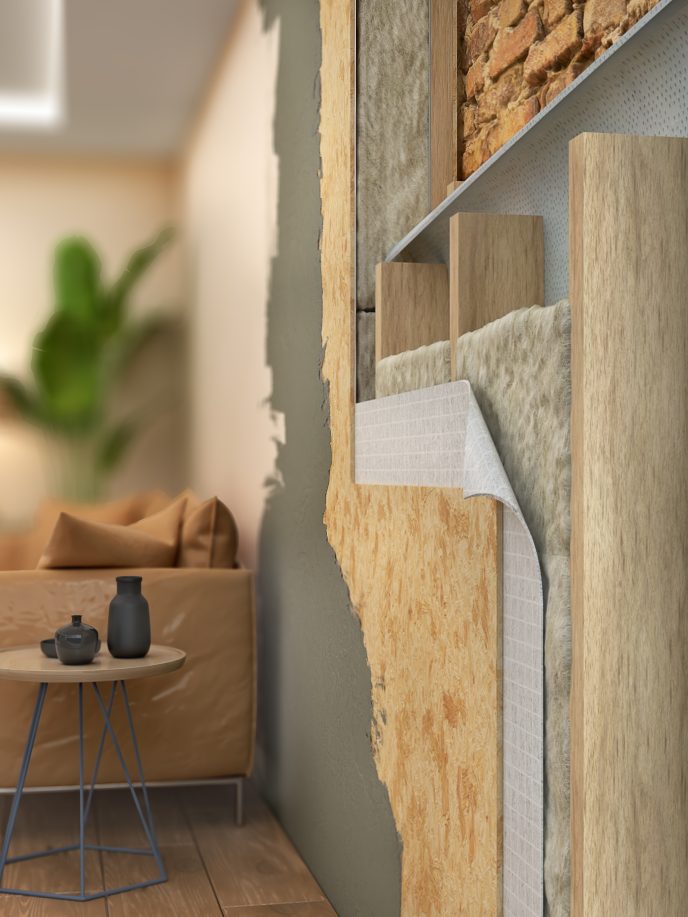
A fabric first approach is an itemised approach which focuses on prioritising the fabric first, making the most significant changes with the largest benefits first. Starting with repairs, fabric measures, heating system, then renewables. By first altering the levels of air-tightness and thermal insulation in the property, measures such as heating system upgrades and installing renewable energy technologies can follow. Installing heating systems and renewable energy after optimising the fabric of the building will give the technology the best chance of energy efficient functionality. Fabric measures include EWI, IWI, cavity wall insulation, floor insulation, loft & roof insulation, windows & doors upgrades and ventilation.
This piece-by-piece approach allows the homeowner to develop a retrofit strategy over an extended period, accounting for any budgetary constraints and unforeseen life circumstances along the way. A project’s inception can be traced back to ‘Trigger Points’, significant life moments such as moving house or having a baby, which activate a desire to undertake a retrofit project. Understanding the nuances behind this decision is integral to the planning and success of a project.
Pros of the fabric first approach
- A high-performance envelope can make significant reductions to a building’s energy consumption – leading to lower energy bills.
- The positive results of fabric measures can be seen in energy bills, carbon emissions and home comfort immediately after installation.
- Reduced cold spots, overheating and drafts will create a healthier indoor environment for occupants. Read more about the impact of damp and cold on wellbeing.
Cons of the fabric first approach
- The quality of installation of the insulation will play a big factor in whether the property is more thermally efficient. For example, incorrectly installed insulation will solve some thermal bridges but can create others – leading to no thermal performance improvements.
- Ventilation solutions (like MVHR) can be invasive to install and require a high level of airtightness of the home to be efficient.

Which approach should I choose?
Homeowners should consider their budget, aims and own comfort when deciding which approach will work best for them. Neither approach is wrong, nor is one way a fool-proof way to increase energy efficiency most effectively.
It’s widely agreed that any retrofit measures (from draught-proofing to heat pumps) is a positive step homeowners can take to contribute to UK climate targets.
The experts over at the Sustainable Development Foundation indicate that so far, the UK has failed to deliver a mass-rollout for homeowners to retrofit their homes to align with climate targets. A different proposal for retrofit (like Retrofit-at-Scale) could give homeowners the confidence to make positive energy changes to their property, with the support from national policy.
LETI’s Climate Emergency Retrofit Guide also outlines best practices for architects, engineers, Local Authorities, social landlords, energy professionals, contractors and clients. We’d recommend familiarising yourself with the quick-start guide to retrofit if you are embarking on your retrofit journey.
The best first step on your retrofit renovation journey will be to seek advice from trusted professionals – whether that’s with a home energy efficiency plan, a thermal imaging survey or an airtightness assessment.
Save 80% on a home energy assessment with a Retrofit West voucher
A home energy assessment is the ideal starting point to retrofit and will guide you on energy efficiency improvements you can make in your home. Simply choose your preferred provider, apply for a voucher and redeem your discount!
Home Assessment Vouchers
FAQs
What is the difference between renovation and construction?
Construction typically refers to building a new structure or adding a significant new structure to an existing building.
Renovation is typically defined as updating, restoring or upgrading existing dwellings – often with the aim to improve it’s condition.
What is the meaning of retrofitting?
Retrofit refers to any improvement work on an existing home to increase its energy efficiency, and lower carbon emissions.
How to retrofit a house for energy efficiency?
Every home is different. Energy efficiency measures and their effectiveness will vary between properties. That’s why is it important to design a retrofit plan for your home with professional advice.
Our expert impartial advice and complete quality assurance are here to help you avoid any obstacles on your journey and guide you to retrofit success, every step of the way.
How to Retrofit Your HomeHow to create a passive house?
A passive house can be created by retrofitting energy efficiency measures. In most cases, however, this is not possible simply due to the site constraints and other financial factors.
You can read more about Passivhaus Standards here.
Is retrofitting more sustainable than building?
Retrofitting homes is the greenest path towards achieving NetZero goals. By using, repairing and upgrading what we already have, the UK housing market can improve in energy efficiency and become healthier homes for occupants.